Showing posts with label Events. Show all posts

Sunday, April 18, 2021

Naval Historical Foundation: Brown Water Bluejackets


I was recently asked to participate in this round table discussion on Vietnam Riverine Warfare in the Mekong Delta.  Although lengthy, its quite a fascinating mix of historical and first hand perspectives of the role of the Navy in the Delta region and how they leveraged a unique mix of assets and strategies to keep the waterways safe and navigable.

"This panel of historians and veterans relate their first hand experiences containing an excerpt from Admiral Zumwalt's memoir On Watch describing his innovative approach to riverine operations in Vietnam, as well as vignettes detailing the in-theater experiences of Vice Admiral David Robinson, Captain Richard Krulis, and Lieutenant Rolland Kidder, three veterans of the brown water warfare who discuss the war in greater depth as part of an ongoing webinar series on naval history."


Rolland Kidder


Sunday, February 11, 2018

The Best Super Bowl


It says something about my age, but I have lived through all 52 Super Bowls. I went to three of them, including the defeat of the Buffalo Bills in Minneapolis.

Thus, I deem myself to have some credentials when it comes to judging the quality of this national sporting event. I would put last Sunday’s defeat of the New England Patriots by the upstart Philadelphia Eagles right at the top.

In the paraphrased words of the great sports philosopher, Yogi Berra, this game truly “wasn’t over until it was over.” Because of his incredible skill as a quarterback, Tom Brady kept the Pats in the  game until the final throw when we saw the incredible hulk, Rob Gronkowski, jump high in the end zone to catch a Brady “Hail Mary” pass which everyone expected Gronkowski to catch… everyone, that is, except the Philadelphia defense. Somehow those green-shirted Eagles players put enough hands and bodies in the air to deflect the pass… and the Eagles won.

We saw some things in that game which we will probably never see again—a quarterback (Foles) catching a touchdown pass, over 500 yards of offense by each team, and, yes, perhaps the last Super Bowl for Tom Brady though he sounds like he will keep playing until he is 50 years old.

Before the game, someone in our family sent a photo of a cartoon by David Sipress to our family football group text.  The cartoon showed an old guy, like me, sitting on a couch in front of a TV, speaking to a young boy and saying: “Remember—we’re not Eagles fans or Patriots fans. We’re “Tom Brady Somehow Gets Humiliated fans.”

My seven-year-old grandson immediately picked up on it, and kept reminding me of it during the game. Last year, while visiting him in Washington, D.C., an SUV passed our car on the highway honking its horn. As it zipped by us, written in the dirt of its rear window, during the time Brady had been suspended for a few games, were the words: “Free Tom Brady!” The driver had seen the Buffalo Bills sticker on my car, and was just trying to rub-it-in a bit. There has never been a quarterback who has beaten the Bills more than Tom Brady.

Admittedly, I was rooting for the Eagles last week just because of that but, in my heart, I expected that the Patriots would find a way win the Super Bowl. (One member of our family was so irate when it looked like the refs might reverse a Philadelphia touchdown, that he texted in that if it were reversed, he would never watch football again!) So, when both teams put on a show which was one for the ages and which went way beyond my usual bedtime…I had to stay up and watch it. Out of the 50 some Super Bowls I have watched, this had to be the best ever!


Rolland Kidder
Stow, NY


Saturday, May 20, 2017

A Tough Vote


Whatever you think about the “Repeal and Replacement of Obamacare” which recently passed in the House of Representatives, most observers would agree that it was a tough vote. It just passed the House with one extra vote (217 “yeas”), 216 was the needed threshold.

I recall some “tough votes” when I was in the New York Legislature. In 1975, when New York City was going bankrupt, there were a lot of them. Usually, they occurred in the middle of the night after hours of floor debate… after members had been worn to a frazzle. Often the legislation had been negotiated only hours before and opponents would allege that “the ink is still wet on this bill!” The goal was always to have at least one more vote in favor than the bare minimum to pass. You didn’t want members voting “yes” on a controversial piece of legislation who would then have to go out and defend themselves in the next election with an accusation that “without your vote, it wouldn’t have passed!”

“If you’ve got the votes, call the roll!”

There was also another axiom on tough voting that, I believe, was coined by former Speaker of the House, Sam Rayburn: “If you’ve got the votes, call the roll!” Another way to state that would be: “Don’t call the roll until you have the votes!” You don’t want to put members on the spot where they may end up making a tough vote only to have it fail to pass. (That is why a similar bill on Obamacare had been pulled from the floor in March.) So by all counts, the recent vote to “repeal and replace” met the criteria of being a “tough vote.” It also qualified for the “ink not being dry” on the bill, since the Congressional Budget Office did not have the time to estimate the financial and human impact of the legislation prior to its passage.

There is one aspect of the vote which might make the recent action in the House even tougher. If someone goes on the line to cast a difficult vote, it is usually best, politically, if the bill becomes law. Perhaps the worst situation in voting in a legislative body occurs when you go on the line in support of a controversial “one-house” bill. That is, it might pass one house of the legislature but not the other.

I remember a lot of walks I made during those days in 1975 from the Assembly chamber over to the State Senate floor to discuss legislation with my counterpart in the State Senate, Jess Present. Jess and I both subscribed to the position that it was best that bills which were difficult to pass should “end up on the Governor’s desk” and signed into law. We weren’t much interested in passing “one-house” bills.

The matter of whether the “Repeal of Obamacare” actually makes it to the President’s desk is something that still seems unclear in Washington. The Republican Party controls both houses of the federal legislature and also the Presidency. Yet, the U.S. Senate has made it clear they will not be putting a “rubber stamp” on what was passed in the House. They want to hear what the Congressional Budget Office and health care providers have to say about the legislation.

If the Senate makes substantive changes to the legislation, it is questionable whether the “Freedom Caucus” in the House would accept those changes. If that happens, there could be a stalemate and no legislation would go to the President. (For those interested in maintaining coverage for the uninsured, this might be a good result.) We have been debating health care politics for the past 8 years. It would be nice if we could finally settle on a national health policy and move on to other issues… like rebuilding our infrastructure and investing in public works such as sewers around Chautauqua Lake!

Rolland Kidder
Stow, NY

Wednesday, April 19, 2017

Should New York Have a Constitutional Convention?

Originally published in The Post-Journal on Sunday, April 16th, 2017.

A view from the original New York State Constitution Ratifying Convention in July, 1788 by Gerald Foster.

Every 20 years, New York residents get a chance to vote on whether or not to have a “Convention” to evaluate and propose changes to the state’s Constitution. Any recommended changes from such a Convention would need to be submitted to the voters for approval. 

Usually, every two decades, this proposal gets voted down. Opponents say: “It will be too expensive.” Others just vote “No” because that is the default position for people who don’t like government. However, the biggest opponents are usually the entrenched interests in Albany like the large state public employee unions and can include the Governor and leaders of the legislature. Why change things if you believe the system is working on your behalf? 

The difference this year is the tremendous cloud that hangs over Albany because of the convictions and indictments of so many of the big “players” on the statewide scene. The past Speaker of the Assembly and Majority Leader of the State Senate are appealing their convictions of selling influence. A grand jury has indicted key individuals in the Governor’s office of rigging the bidding for state contracts. It is not a pretty picture. There is talk of ethics reform but tough new laws on oversight and accountability are difficult to accomplish when they are related to the power structure of state government. 

Because the problems that have evolved are “structural” in nature, the only way to effectively deal with them is through amending the state’s Constitution. 

I have some understanding of the issues since I viewed the process during the four terms I served in the New York State Assembly. Because the problems that have evolved are “structural” in nature, the only way to effectively deal with them is through amending the state’s Constitution. 

For example, should New York limit the terms that a person can serve as Speaker of the Assembly or Majority Leader of the State Senate? This approach has been implemented in California. Should the state limit the number of terms that a Governor can serve… as we do at the federal level in limiting the President to two terms? To implement such structural changes in our state would require a change in the New York State Constitution. 

Other structural changes could include establishing a non-partisan commission perhaps consisting of jurists to implement the reapportionment of legislative and congressional districts that takes place every ten years. Right now, the legislature and governor make these decisions based more on political considerations that anything else. Other states have implemented non-partisan redistricting panels moving away from the “gerrymandering” approach still followed in New York. 

Realistically, the only way to make any changes of this magnitude would require a Constitutional Convention. Such proposals are not going to come from the Governor or state legislature. Is the state ready for this? These are not ordinary times. The political quagmire that our state politics has become requires change. In my view, this is a year to vote “Yes” on a Constitutional Convention. 

The voters will have the last say. They will first need to vote for a Constitutional Convention…then they will subsequently have to approve any recommended changes to the New York State Constitution that would be proposed by the Convention. The important vote on having a Constitutional Convention only happens every 20 years. Citizens of New York need to be thinking about how they will vote in November. 

For more information on the New York Constitutional Process and critical timelines, visit 
The New York State Constitutional Convention Clearinghouse.

Rolland Kidder 
Stow, NY


Monday, January 30, 2017

A Tale of Two Days in the Federal City


This week we sat down to dinner with great friends over many years. They had gone to D.C. to attend the Inauguration of Donald Trump. We had gone primarily so that my wife, daughter and other family members could attend the Women’s March on Washington.

One of the pluses of living in a small town is that you don’t have to go far to have a stimulating political discussion! Our friends thought the new President’s speech was fine and that he essentially restated what he had promised to do in the campaign. They had prime standing room near the Capitol and looked out on a vast sea of enthusiastic supporters who had come to participate in the celebration.

What I saw was an unsmiling new President with his fist raised. He seemed to be announcing that Washington would now be introduced to a new “no holds barred” type of political confrontation. The Lincolnesque words that I was hoping for to pull the country together like “malice toward none, with charity to all”… never came.

Common in our interest was witnessing the peaceful transfer of power

Nevertheless, we and our friends were experiencing the same event. Common in our interest was the witnessing of the peaceful transfer of power in this great democracy which must be a marvel to the rest of the world. Once the speeches were over, the Trumps accompanied the Obamas to the east side of the Capitol where they shook hands as the former President and his wife left by helicopter.

During the Inaugural festivities the camera near the top of the Capitol dome scanned the crowd. The Mall was packed with people near the Capitol, but you could see open space down toward the Washington Monument. That wouldn’t have usually resulted in acrimony, but became controversial when the new President, the next day, criticized the media for underestimating the crowd.

At our vantage point, our daughter’s home about 10 blocks east of the Capitol, Inauguration Day on Friday was relatively quiet. However, on Saturday, the day of the March, nearly every street heading toward the Capitol was jammed with people walking. The D.C. government announced that 200 bus parking permits were issued for the Inauguration, but that 1200 had been issued for the March. Many people were walking 2-3 miles from the bus parking at RFK stadium to get to the National Mall.

People were happy to be there and involved in their democracy… 
though not necessarily excited about their new President

Those from our family who joined in were amazed at the dignified and courteous demeanor of the crowd. People were happy to be there and involved in their democracy… though, not necessarily, excited about their new President. There were so many people on the Mall that, at first, there was no place to march. Finally, the crowd began to move toward Pennsylvania Avenue and many ended up walking toward the White House along the same route the parade had taken the day before. If you combined the crowds from Friday and Saturday it could have been the biggest Inaugural event ever!

Two trips over two days to the Federal City experienced by two couples who saw things a little differently and retold it over a lively dinner conversation… that is one of the beauties of living in Chautauqua County. It is good to keep talking with each other!


Rolland Kidder
Stow, NY


Thursday, June 2, 2016

Founding Flyers

April 20, 2016 was the 100th anniversary of the founding of the United States Air Force.  Ceremonies marking the occasion were conducted at a beautiful memorial west of Paris dedicated to the Lafayette Escadrille, an American flying squadron formed in World I to fly with the French.

The beginning for Americans flying in combat started with some young American men who were living in Paris when World War I broke out.  They felt compelled to “enter the fray” on the side of France, an old American ally going back to the Revolutionary War.  They were advised at the time, in 1916, that the United States was still technically a “neutral” in the First World War.   That did not deter them.   They joined the French Foreign Legion, began their flight training under French command, and soon were engaged in aerial combat with the Germans over the trenches east of Paris.  They took the name “Lafayette” from the French General who had been part of George Washington’s Continental Army.  Their logo, painted on their planes, was an American Sioux Indian headdress.

It was a risky time in military aviation.  Airplanes were new and aerial combat untested.  A year later (1917), when the United States entered the war, they would be attached directly to the U.S. Army which had established its own Air Service command.  Before the war ended on November 11, 1918 many of these flyers had been killed.  At war’s end, a French foundation supported by private philanthropy from the United States, built a Memorial to these earliest American combat flyers.  38 American pilots are buried there in a sarcophagus beneath a Memorial reminiscent of the Arch D’ Triumph.


French Fighter Jet Formation over Lafayette Escadrille.  Lead aircraft painted American red, white and blue.


Last month, on April 20th, United States and French air power came in force to remember these pioneers of military aviation. There was a fly-by of jet fighters and, at the end of the ceremony, a B-52 bomber flew over the site. It almost defies logic that something as historic and mammoth as the U.S. Air Force could have such humble beginnings: a small group of dedicated American volunteers banded together to fly for what they believed to be the just cause of an American ally.

Over the past three years, the American Battle Monuments Commission, supervised a renovation of the Lafayette Escadrille Memorial.  After the ceremony, the commission voted to make the Memorial an integral part of the American memorials and cemeteries where our overseas war dead are buried.  As one of our commissioners, an Air Force veteran, said with great emotion when the vote was taken:  “Now, we have brought our boys home.”


Lafayette Escadrille Memorial Re-Dedication, April 20, 2016

Though the young men who died fighting in skies of France in World War I faced fear and death, I have never known any pilot who did not first love and appreciate the beauty of flying and the thrill of being in the sky.  25 years later, in World War II, another American pilot similarly volunteered and died flying Spitfires for the British Royal Air Force.   Prior to his death, John Gillespie Mcgee Jr. wrote this poem which he sent to his parents

                 “Oh!  I have slipped the surly bonds of Earth
                  And danced the skies on laughter-silvered wings:
                  Sunward I’ve climbed, and joined the tumbling mirth
                  Of sun-split clouds—and done a hundred things
                  You have not dreamed of—wheeled and soared and swung
                  High in the sunlit silence.  Hov’ring there,
                  I’ve chased the shouting wind, and flung
                  My eager craft through footless halls of air….

                  Up, up the long, delirious burning blue
                  I’ve topped the wind-swept heights with easy grace
                  Where never lark, or even eagle flew—
                  And, while with silent, lifting mind I’ve trod
                  The high untrespassed sanctity of space,
                  Put out my hand, and touched the face of God.”

As with those buried at the Lafayette Escadrille Memorial, John Gillespie Magee, Jr. was a young man.  He was nineteen years old when he died. 


Rolland Kidder
Stow, NY
Commissioner, American Battle Monuments Commission
                 
Photos courtesy of the French Ministère de la Défense


Sunday, April 10, 2016

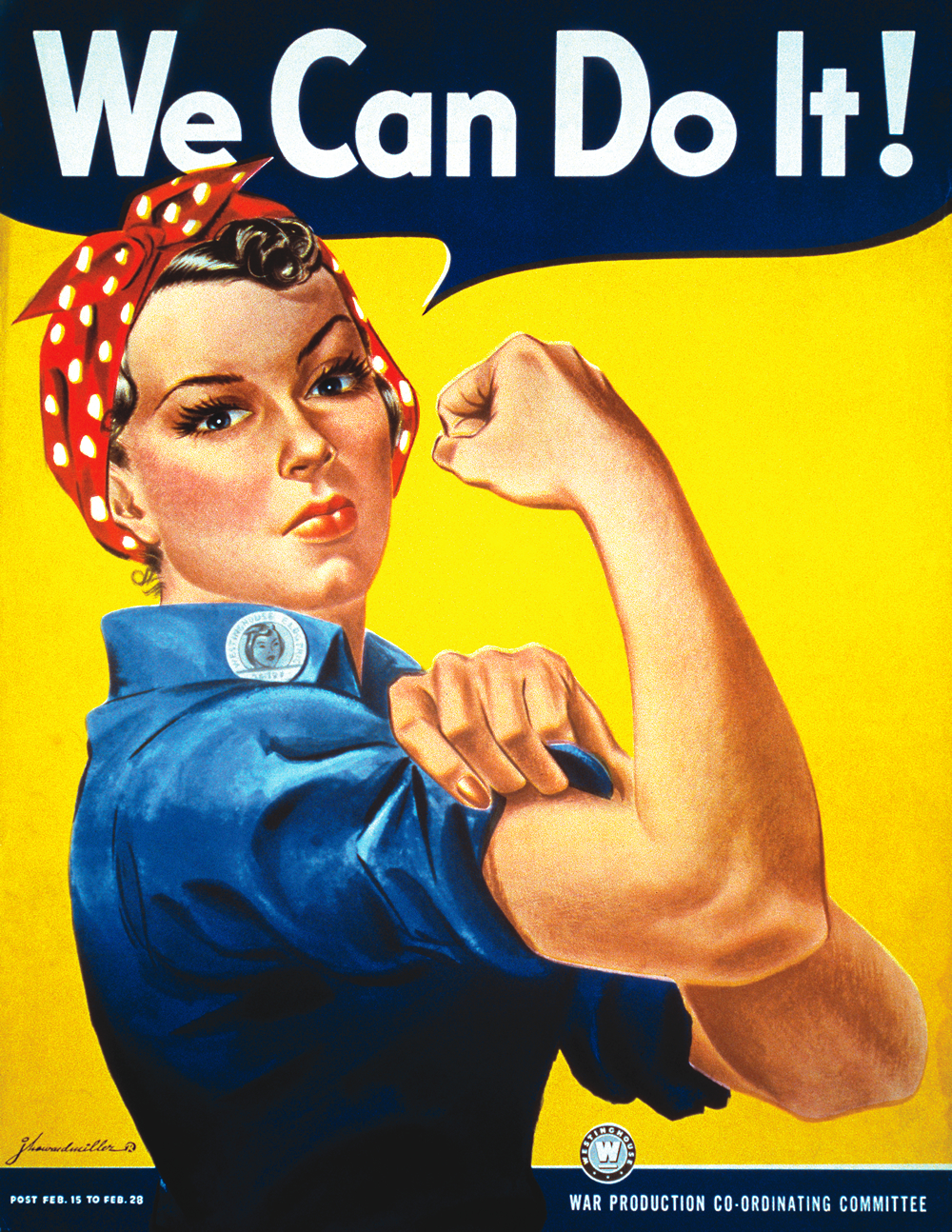
"Rosie the Riveter" veterans honored at World War II Memorial


On March 22, 2016 a group of “Rosie the Riveter” veterans sponsored by Honor Flight in Detroit visited the World War II Memorial. During the Second World War these women and thousands like them worked at industrial plants around the country to manufacture the goods necessary to win the war. A recruitment poster designating them “Rosie the Riveter” became a part of story of World War II. They built everything from planes and ships to jeeps and machine guns.

Never before had women been so involved in the industrial production of the country. Their participation in the home front effort forever changed the role women would play in the workforce. The importance of their contribution in winning the war is engraved in stone and bronze at the National World War II Memorial.


"Rosie the Riveter" from Republic Pictures, 1944

Saturday, January 9, 2016

Christmas at the Vietnam Veterans Memorial

For Vietnam veterans, The Wall in Washington, D.C. still elicits vivid memories. National Park Service volunteer, Dan Arant, recently took these photos (edited by Donna Prince) on Christmas Day and on December 12th when the Christmas Tree Ceremony was held. Dan is also a volunteer at the National World War II Memorial.  National Park Service Volunteers wear yellow hats and shirts while “on duty” at our nation’s memorials in Washington.  We all benefit from their volunteer service and are grateful for their commitment to public service at these important sites.

Rolly Kidder


Saturday, November 28, 2015

2015 Veteran's Day Ceremony at the National World War II Memorial


For the past several years, I been honored to serve on the Board of Friends of the National World War II Memorial in Washington, D.C . This organization is a partner with the National Park Service in sponsoring 5 days of national commemoration at the Memorial, including Veterans Day.

The attached photographs were taken before the ceremony began and then immediately after it concluded. One reveals the centrality of this time in our nation's history... the podium situated right on the east-west centerline of the National Mall. The other photo shows the crowd gathered around the wreaths in front of freedom wall at the end of the event, a visible reminder of the sacrifice made by over 400,000 of our fellow Americans who perished during the war.

A video of the Veteran's Day ceremony can be found on the Friends' website at Friends of the National WWII Memorial.  Also, on the website is a video of our third annual Haydn Williams' Legacy Lecture given this year by Tom Brokaw. It is an incredible 1 hour talk (without notes) of his experience growing up in the post-war years, and of his reasons for writing the book which is now a part of the World War II lexicon... "The Greatest Generation."


Rolland Kidder


A Veteran's Day Tradition in Jamestown, NY


As far as I know, this ceremony has been going on since the end of the First World War at the corner of 3rd & Main.  Kudos for the Jamestown High School band.

Rolly Kidder

Tuesday, October 27, 2015

The Dedication of Eldon W. Tozer Square

It was an honor for me recently to participate in the last dedication ceremony for Natick, Mass. residents who were killed in the Vietnam War. In a noon-time ceremony, the name of Eldon W. Tozer became a part of the “Natick 11” who gave their lives serving in Vietnam. A sign was unveiled at the corner of Marion St. and Lincoln Place, now called “Eldon W. Tozer Memorial Square.” 


Though he is buried in Cullen’s Brook, Quebec and was a Canadian, Eldon joined the U.S. Navy while living with his sister and working in Natick. In a sense, he is an “adopted son” of the Natick community. It was moving and powerful for them to honor him in this way.

Jim Tucceri unveils the sign designating “Eldon W. Tozer Square.”

Jim Tucceri, Eldon’s nephew, participated in the ceremony by unveiling the sign designating the new Eldon W. Tozer Square. The home where Jim grew up and where Eldon lived is just four houses down the street from where the sign is located. Resolutions passed by both the House and the State Senate of Massachusetts were presented to Jim (representing the Tozer family,) as was a letter from the Province of Quebec. Special thanks go to Paul Carew (Veterans Agent of Natick), Maureen Sullivan, (Co-coordinator of Natick Veterans Oral History Project), and Josh Ostroff (Natick Board of Selectman) for their leadership in organizing the event.

I read into the record a statement with a strong personal touch which was sent to me by the sister of Eldon Tozer, Frances Tozer Gregoire:

“I was nine years old when he was born. I thought he was sent from Heaven. He was born at home at night, and I heard his first cry. 
I helped take care of him because I was the oldest girl. He was always quiet and very interested in nature. When he was young, he enjoyed watching bugs and spiders. He loved the little things in life. 
During his late teen years, he lived with me, my husband and our children. 
I don’t remember how old he was when he moved to Natick to be with my sister Mona. He worked in a baseball factory there before he joined the Navy. He never gave up his Canadian citizenship. I looked forward to his visits back home.”


It was cold and overcast the day of the ceremony, but I am sure that everyone present was warmed by the beauty and simplicity of the occasion. Local and state representatives were there, a Sargent-Major from a U.S. Army base was present, and an honor guard of veterans with a firing squad provided military honors. Eldon Tozer would have been pleased that he was being remembered by a caring community which has never forgotten him or the sacrifice that he made while serving with the Armed Forces of the United States of America.

Rolland Kidder


Jim Tucceri, Eldon’s Nephew, and author.

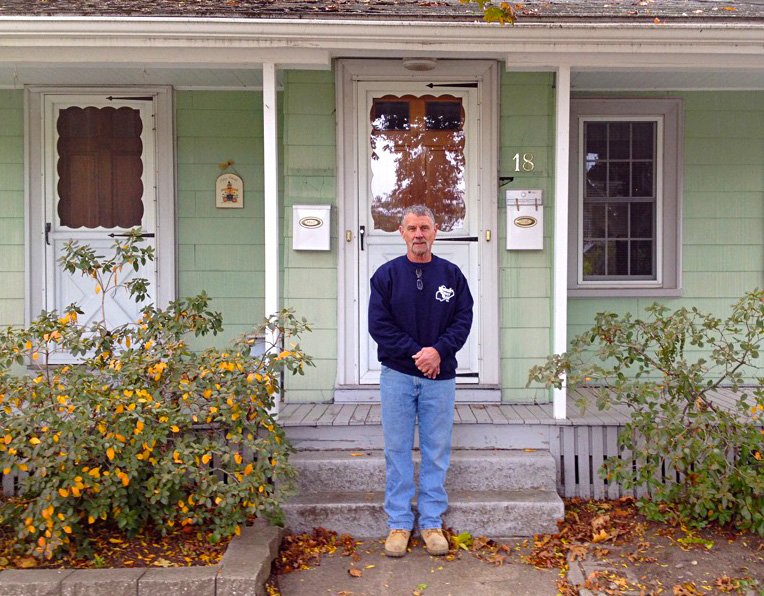
Jim Tucceri standing in front the house he grew up in, and where 
Eldon Tozer lived before he joined the U.S. Navy in 1957.

Official letter from the Quebec Consul - read at the dedication by
Josh Ostroff, Natick Board of Selectmen


Wednesday, September 30, 2015

Navy River Divisions 515 / 535 are reunited at Hampton, Virginia event


Butch Jarvinen and Rolly Kidder of River Division 535 share some stories

Butch Jarvinen and I served together in River Division 535, from 1969-'70 in the Mekong Delta. Jarvinen lives in rural Virginia and he joined myself and other Navy veterans at an Army Sea Tigers Reunion in Hampton, Virginia.  The Sea Tigers also operated PBR's during the Vietnam War.  The two PBR's present at the reunion were restored by Dennis Ambruso and David Pizzoferrato. Ralph Richason, River Division 515, helped coordinate the event for Navy veterans.  Ralph Fries, a PBR Vietnam veteran who has documented all of the Navy PBR men killed in action, presented his documentary work as a part of the reunion event.  Following are pictures and a writeup on the reunion event.

Rolly Kidder 


Vietnam era PBRs (Patrol Boat, River) on display for returning veterans in Hampton marina
PBR's with current Navy boats called RIB's (rigid-inflatable boats)
A US Navy Officer addresses veterans in front of Dennis Ambruso (leaning on the .50 cal Machine gun).
Dennis restored the PBR boat on display this weekend. 


Tuesday, June 16, 2015

Recent Appearance / Book Signing : NYC


NAVAL ORDER OF THE UNITED STATES NEW YORK COMMANDERY

June 8th, 2015, 11:30am  / Racquet & Tennis Club /  370 Park Avenue, New York City


Rolland “Rolly” Kidder 

“The Brown Water Navy in Vietnam” 

From 1994 to 2001, Rolland Kidder served as a Presidential-appointed Commissioner of the American Battle Monuments (ABMC) and was a member of its World War II Memorial Committee, which was responsible for finding a site and selecting a design for the National World War II Memorial. He was again appointed to serve on the ABMC by President Obama in 2010. In addition, he is a director of Friends of the National World War II Memorial, a Washington-based non-profit organization. Mr. Kidder is also author of the book, A Hometown Went to War, an oral history of 37 veterans describing their experiences during World War II. He is a Navy Vietnam War veteran, having served as a Patrol Officer with River Division 535 in the Mekong Delta in 1969 and 1970. He returned to Vietnam in 2010 and reflects on the War and his impressions of the country in a new book (2014), Backtracking in Brown Water. 

Mr. Kidder served in the New York State Assembly from 1975-1982, and operated his own Appalachian-based natural gas drilling company from 1984-1994. Subsequent to that, he worked in an investment advisory firm for ten years and, most recently, was the Executive Director of the Robert H. Jackson Center in Jamestown, NY – the hometown of Supreme Court Justice and Chief Nuremberg Prosecutor, Robert H. Jackson. Mr. Kidder is a graduate of Houghton College, Evangelical Theological Seminary, and the State University of New York at Buffalo Law School; and served as a Director of National Fuel Gas Company for ten years. He and his wife, Jane, are the parents of four children and eleven grandchildren. They live on Lake Chautauqua in upstate New York.

Friday, April 17, 2015

A Great Year for Golf!

One of the passions I have acquired later in life, is a love and respect for the game of golf. It is not because I am a good player though, in the summer, I usually Tee-it-up at least once a week. It is a game which requires discipline and no excuses… it is you against the golf course. Everyone is measured by the same opponent—the golf course. It is also a game with a rich history, including what I believe is the “tournament of the year,” held every year at the same course, Augusta National.

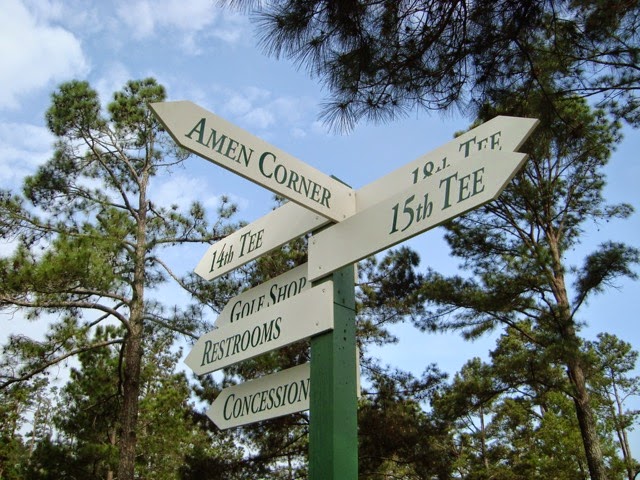
I am not a big one for “bucket list” items but this year I was able to see one to fruition—getting my sons and son-in-law to Augusta to view a practice round at The Masters. If you have never been, you should try to go. It is like walking in a Garden of Eden as you move along with the players around this course. It also gives you a chance to appreciate the magic of Bobby Jones in supervising the construction of this magnificent course—the way it ebbs and flows from the high ground around the clubhouse down to the bottom land around Amen Corner and Rae’s Creek.

Here we all are in front of the Leader Board at Augusta last week and quite an event it was for golf. A new generation of golfers announced their arrival on the scene with the magnificent play of 21 year-old Jordan Spieth highlighting the tournament.  It couldn’t have been better.  It was a spectacular year to be at the Masters!

Rolly


In front of the famed Leaderboard
Rolly channeling the great Bobby Jones 
We spent the afternoon overlooking the Hogan Bridge at Amen Corner 
Bubba heading to the 17th tee
A final toast to Tradition on the way home
Quoting my wife Jane: "Didn't we all know it would end up like this"

Wednesday, July 16, 2014

Book Signing at Chautauqua Institution this Weekend!


Rolland Kidder, author of Backtracking in Brown Water,  will be signing books at the Chautauqua Institution Bookstore on
Sunday, July 20th from 12pm - 2pm 

Chautauqua Institution was founded in 1874 and is located on the shores of Chautauqua Lake in upstate New York.  Originally founded as an educational retreat center for the Methodist Church, the Institution has become one of the premier summer cultural centers in the United States.  Over a 9 week season it offers programing in theater, opera, lectureships and music.   It also hosts a Symphony Orchestra which regularly performs twice a week.   The Chautauqua Literary and Scientific Club is one of the oldest book clubs in America.  Its a beautiful setting with many things to see and do.

Gate passes to the Institution are free on Sundays.  The Chautauqua Bookstore is located on Bestor Plaza at the center of the Chautauqua grounds.  The public is invited to the book signing, we'd love to see you there!


View Larger Map


Tuesday, June 3, 2014

Jamestown Naval Reserve Chiefs' and Officers' Mess


AUTHOR'S NOTE:  On May 31, 2014, I was privileged to address the annual dinner of this organization.  Forty years ago, after returning from active duty in Vietnam, I drilled at the Jamestown Naval Reserve Center.  In those days, we required to stay involved in the reserves for about three years upon conclusion of our active duty commitment.

Though this Reserve Center has been closed now for over ten years, those who became friends during the days it was open, continue to meet annually through what is called the “Chiefs’ and Officers’ Mess.”   Last Saturday night I spoke to the group about the book Backtracking in Brown Water.

I received a wonderful reception and also renewed some old friendships.  It has always amazed me how common experiences serving in the military live on in organizations like this.  It is a tribute to a camaraderie which develops and which is not easily explained unless you were a part of it.

Rolland Kidder

Saturday, May 24, 2014

WWII Memorial 10th Anniversary Celebration


It was a fabulous event on a gorgeous day in Washington, DC!

Below is a photo of the Members of the American Battle Monuments Commission’s World War II Memorial Site and Design Committee at the Memorial’s construction site in 2001, and again today (May 24, 2014) at the 10th anniversary celebration.  This is the first time the group has been together in a long while, and it was a very special moment.   


From left to right: 
Frank Moore, Dr. Helen Fagin, Ambassador Haydn Williams, Friedrich St. Florian (memorial designer), Rolland E. Kidder, Brigadier General Pat Foote, USA (Ret.).


Saturday, April 19, 2014

Kidder Speaks at the Robert H. Jackson Center Book Signing


Vignettes from a March 27, 2014 interview with Rolly Kidder on his new book "Backtracking in Brown Water".  A personal odyssey of retracing life on Mekong Delta River Patrols. The book signing and interview occurred at the Robert H. Jackson Center in Jamestown N.Y.


Thursday, April 3, 2014

PODCAST: Fred Dicker / Capital District Talk Radio

Long time New York Post columnist Fred Dicker interviewed Rolly Kidder on Capital District Talk Radio 1300AM out of Albany, NY on Friday, April 4th.

PODCAST LINK BELOW:  The interview is in the second half of the hour, fast forward to the 29th minute to begin.  A lively conversation about Rolly's recent book as well as his perspectives on modern day NYS Energy Policy and the political climate in Albany...


Wednesday, April 2, 2014

PODCAST: CONNECTIONS with EVAN DAWSON

Below is a recording of a live interview with Rolly from April 1st, 2014 on NPR station WXXI am1370 in Rochester, NY.  It's from the CONNECTIONS with EVAN DAWSON radio talk show and in it they discuss the backstory of Kidder's latest book "Backtracking in Brown Water" as well as some of the revelations that were born from the personal research and relationships that he experienced along the way.  This is a good overview of the book with some very interesting commentary.


By the way, Evan's talk show airs Monday - Friday from 12-2pm. You can listen live online at: http://player.nprstations.org/wxxi/#stream/wxxi