Monday, March 27, 2017

Two Options for Public Service


Most people, I believe, support the idea that public service is a good thing. It may have fallen out of favor recently as we have started “draining the swamp” in Washington. Nevertheless, I am confident that most Americans still rally around the idea that public (government) service and good public servants help us all.

As an example, we have two public organizations in Chautauqua County which require leadership. One employs a CEO who is paid approximately $160,000 a year, has an employment contract, a good benefit package, supervises 158 employees, has a regular work week and administers a $25.5 million budget. The other organization has a CEO with no employment contract, who makes $95,000 per year, administers a $273 million budget, supervises 1200 employees and works a regular work week plus is required to attend virtually non-stop evening and week-end meetings/events with constituents.

If one of your children were seeking employment and wanted a CEO position in the public sector in our area… which job would you recommend they take? I would imagine that for most people it would be a “no-brainer.” You would recommend the job with higher pay, fewer employees, a smaller budget and more free time.

So what does this boil down to in Chautauqua County? In this particular case, it would mean that you would recommend the position of Superintendent of the Southwestern Central School system vs. that of becoming the County Executive as being the best employment option for one of your kids. As a matter of fact, it might even evoke the thought of “who in their right mind” would even want to be the Chief Executive of Chautauqua County?

Who in their right mind would even want to be Chief Executive of Chautauqua County?


This all, of course, is becoming relevant because our current County Executive, Vince Horrigan, has announced that he is not running for re-election. Most of us, I believe, feel fortunate that Mr. Horrigan has been our county leader for the past four years. He is a retired Air Force Officer who has worked hard on our behalf to stabilize county finances, encourage investment in sewer and water infrastructure, and promote job growth in the county. But the larger question is: how long are we going to be able to find good people to run for this job?  Something is out-of-kilter in how we value this leadership position.

Years ago, I was involved in the decision to create a County Charter form of government with an elected County Executive. We debated having the Executive be an appointed official but thought, at the time, that accountability to the voters should be the over-riding concern… and the voters approved direct election of the Executive in adopting the County Charter. However, I am having second thoughts now about that decision.

Something is out-of-kilter in how we value this leadership position.


Maybe the County should implement a structure more aligned to that in the private sector. You could have a Board of Directors (the legislature) who are responsible to the Shareholders (the voters), and the Board would appoint a CEO (the County Executive) to run the day-to-day affairs of the County. At least, it seems to me, this system might be more appealing to those who want to commit to being a CEO in a position of public service. It shouldn’t be that the position of School Superintendent (of which there are 17 in Chautauqua County) should be so much more appealing than that of the County Executive who is responsible for the largest portion of our non-school, governmental functions.


Rolland Kidder
Stow, NY


Monday, January 30, 2017

A Tale of Two Days in the Federal City


This week we sat down to dinner with great friends over many years. They had gone to D.C. to attend the Inauguration of Donald Trump. We had gone primarily so that my wife, daughter and other family members could attend the Women’s March on Washington.

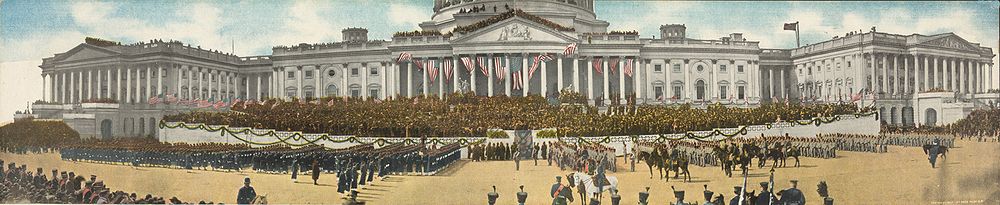
One of the pluses of living in a small town is that you don’t have to go far to have a stimulating political discussion! Our friends thought the new President’s speech was fine and that he essentially restated what he had promised to do in the campaign. They had prime standing room near the Capitol and looked out on a vast sea of enthusiastic supporters who had come to participate in the celebration.

What I saw was an unsmiling new President with his fist raised. He seemed to be announcing that Washington would now be introduced to a new “no holds barred” type of political confrontation. The Lincolnesque words that I was hoping for to pull the country together like “malice toward none, with charity to all”… never came.

Common in our interest was witnessing the peaceful transfer of power

Nevertheless, we and our friends were experiencing the same event. Common in our interest was the witnessing of the peaceful transfer of power in this great democracy which must be a marvel to the rest of the world. Once the speeches were over, the Trumps accompanied the Obamas to the east side of the Capitol where they shook hands as the former President and his wife left by helicopter.

During the Inaugural festivities the camera near the top of the Capitol dome scanned the crowd. The Mall was packed with people near the Capitol, but you could see open space down toward the Washington Monument. That wouldn’t have usually resulted in acrimony, but became controversial when the new President, the next day, criticized the media for underestimating the crowd.

At our vantage point, our daughter’s home about 10 blocks east of the Capitol, Inauguration Day on Friday was relatively quiet. However, on Saturday, the day of the March, nearly every street heading toward the Capitol was jammed with people walking. The D.C. government announced that 200 bus parking permits were issued for the Inauguration, but that 1200 had been issued for the March. Many people were walking 2-3 miles from the bus parking at RFK stadium to get to the National Mall.

People were happy to be there and involved in their democracy… 
though not necessarily excited about their new President

Those from our family who joined in were amazed at the dignified and courteous demeanor of the crowd. People were happy to be there and involved in their democracy… though, not necessarily, excited about their new President. There were so many people on the Mall that, at first, there was no place to march. Finally, the crowd began to move toward Pennsylvania Avenue and many ended up walking toward the White House along the same route the parade had taken the day before. If you combined the crowds from Friday and Saturday it could have been the biggest Inaugural event ever!

Two trips over two days to the Federal City experienced by two couples who saw things a little differently and retold it over a lively dinner conversation… that is one of the beauties of living in Chautauqua County. It is good to keep talking with each other!


Rolland Kidder
Stow, NY


Sunday, January 15, 2017

Uncharted Territory


Published January 15, 2017 in The Jamestown Post-Journal

One of the exciting aspects of being alive in 2016/2017 is that we have witnessed a lot of “firsts” in American politics. It is the first time that we have elected a person with no governmental experience to the highest office in the land. It is also a “first” that he did this with little support from the establishment of his own party and he did it single-handedly by being his own communications director. It will be interesting to see how it all plays out.

In saying that President Trump had no “governmental experience,” we must acknowledge that others came to that office who had never been elected before. Herbert Hoover comes to mind. However, Hoover had extensive experience dealing with public issues and had been Secretary of Commerce in the 1920’s. Presidents Grant and Eisenhower also had no elective experience, but they had been deeply immersed in the politics of the Nation through their military service. Because of that, they had a strong sense and appreciation of the complexities and challenges associated with becoming President and Commander-in-Chief.

If nothing else, Donald Trump is now living proof that, in America, experience in politics and government is not a prerequisite to becoming President. That also means that though we are rooting for him to be successful, we are also “holding our breath” a bit hoping that he doesn’t fail.

It also is becoming apparent that Mr. Trump’s ascension to the Presidency is coming at a time when the world, in general, is in a topsy-turvy mood. If this were another country (take Argentina as an example), one wouldn’t be much worried. The world doesn’t usually look to Argentina for global leadership. However, this is the United States of America which fought two World Wars in the 20th century and is now looked to as the leader of the world. It would have been reassuring had Mr. Trump been tutored at least a bit in the intricacies of international diplomacy.

As Van Miller used to say: “Fasten your seat belt folks!”

But, all of this is now conjecture. As Van Miller used to say in announcing Buffalo Bill’s games: “Fasten your seat belt folks!” We have a new President, and we must wish and hope for him to be successful.

I see some bright spots in his leadership team. His nominee for Secretary of Defense, James “Mad-dog” Mattis had a stellar career in the Marine Corps and was exposed to the quagmire of the War in Iraq. Mike Pence, his Vice President, served in the Congress and as Governor of Indiana—he knows how difficult it can be to run a government.

Then, there is his son-in-law, Jared Kushner: a young, 35 year-old man, but a person who seems to have depth and perspective. He studied sociology at Harvard, and received his JD and MBA at New York University. You cannot have gone through that and not picked up on the complexities and challenges of running a country like America which has obligations of leadership throughout the world. Mr. Kushner will now be Senior White House Advisor to the President.

So good luck, Mr. President. You won the election and now all of us will be affected and governed by your decisions. We are in the same boat now!

Rolland Kidder
Stow, NY

Monday, January 2, 2017

Electoral College Is Our System


Published January 1st, 2017 in The Jamestown Post-Journal


an amendment?  Probably not. 

Wednesday, December 21, 2016

The 75th Anniversary of Pearl Harbor


On December 7th, I was privileged to attend the 75th Anniversary commemoration of the Pearl Harbor attack at the World War II Memorial in Washington. Several Pearl Harbor survivors and other veterans of World War II were in attendance and were honored. They also assisted in the laying of wreaths along what is called “freedom wall.”


Former Members of WWII Memorial Site and Design Committee
(Frank Moore, Pat Foote & Rolly Kidder, 
taken December 7, 2016)

It was a cold but beautiful day at the Memorial. The Navy Ceremonial Band played and there were probably a thousand people gathered around the Rainbow Pool which is the architectural centerpiece of the Memorial. You become overcome with the “Americana” of it all. The Lincoln Memorial stands majestically in the background and the Washington Monument rises off to the East. Surrounding the plaza and pool are 56 granite pillars, each representing the states and territories that contributed to the war effort and made victory possible. They are connected by huge bronze ropes symbolizing the unity of the nation at that time. Never in the history of our country has the nation been more united.

Some of the World War II veterans attending had been flown in by Honor Flight from Austin, Texas. Honor Flight is a totally volunteer effort by communities around the country and was created to insure that World War II veterans would have a chance to see their Memorial. It has expanded so that now Korean War and Vietnam veterans can also visit the memorials that honor their service. There have been veterans from Chautauqua County who have participated in flights from Western New York and the Buffalo/Rochester area.

The highlight of the ceremony was a powerful and very personal speech made by Senator John McCain. Both his father and grandfather served in the Navy during World War II and both attained the rank of four star Admiral during their naval careers. McCain still remembers Pearl Harbor Day in 1941 when as a 5 year-old, on a Sunday afternoon, a Navy car pulled into the driveway of his family’s home in Connecticut to inform his father that the Japanese had bombed Pearl Harbor and that he must immediately return to the Naval base. In John McCain’s words: “I rarely saw him for the next four years.” Like every family who lived during that time, his family was personally affected by the declaration of war. 

There is a saying about veterans that “all gave some, but some gave all."  
This could also be said about some families…

John McCain’s grandfather became one of the leading naval officers of the War and served as one of the commanders in Admiral “Bull” Halsey’s Fast Carrier Attack Force in the Pacific. The pressure and stress of war took their toll. Senator McCain related a story I had not heard before. On the day his grandfather returned home after the end of the Second World War, “exhausted from the burdens of war,” he died. He had given the country his all. He had no more to give. 

I have always held Senator McCain in high regard. Part of that comes from the fact that we are both Vietnam Navy veterans. However, very few veterans of that war went through the five years of imprisonment that John McCain did after being shot down over North Vietnam. After retiring from the Navy, John McCain has gone on to serve his state and country for another 30 years in the Congress and the Senate, and was also a candidate for President of the United States.

Families like the McCain’s make you proud to be an American. There is a saying about veterans that “all gave some, but some gave all.” This could also be said about some families… including that of Senator John McCain.


Rolland Kidder 


Thursday, November 24, 2016

A Letter to the Kids


November 20, 2016

Election Post Mortem—A Letter To The Kids

Over forty years ago, I returned to Chautauqua County from the Vietnam War and became involved in local politics. It started with a defeat in 1970 in a run for the New York State Assembly. After that, I was elected twice to the county legislature and then four times to the Assembly before leaving elected politics to become involved in the private sector. So I have experienced the “ups and downs” of our system of electing those who represent us in government. I also came to understand and respect the electorate and also to respect those who are willing to become involved in politics and run for public office.

Our democratic process will only work if citizens become involved, and if some of those citizens are willing to assume the responsibility of serving in public office. This last election campaign was not one of inspiration for younger generations of Americans, and so, after the election, I sent this letter to our four children.

“To the Kids:

You have already probably heard more than you need to about the election. In my view, the biggest casualty is probably the system itself. Who would want to run for President and endure the mud slog that we just went through?  Would you want to? Would you want one of your kids to?  The answer is probably “no.”

It made me think back to 1960. I was a Republican and a student at Houghton College. The concern then was that JFK was a Catholic and that if he were elected, the Pope would take over the U.S. government. Then, in fact, Kennedy did get elected, and the Pope didn’t take over. What we remember from that time now is the inaugural: “Ask not what your country can do for you. Ask what you can do for your country.” Out of that came the Peace Corps and lot of new recruits (like me) who got interested in government.

Compare that to what we just went through. “Lock her up!” “Drain the swamp!”  Who is going to be encouraged to give some time to government service after that? That is what concerns me most.

I hope that this past election doesn’t discourage members of our extended family from getting involved at some level in “giving back” through government service. We need people to run local governments, school districts and, maybe, here at the lake… sewer districts! I am sorry that our grandkids had to go through this ugly election. It is really better than that, and we need people involved as citizens. We are all shareholders in this corporation we call “America.”

So let’s not retreat into a cave and let somebody else deal with the problems. Maybe there is somebody out there who would make a good legislator, school board member, Assemblyman, Congressman… and who knows… President. This is America. What we need now is to have people “double down” and get involved!

Dad

Rolland Kidder is a Stow resident.


Tuesday, August 30, 2016

Father of the National World War II Memorial


On April 22nd, this year, one of my best friends died: Ambassador F. Haydn Williams of San Francisco.

In a prior posting, I wrote about the incredible life of Senator Robert Dole and his commitment to the Memorial and being co-chair of the campaign to raise the money to build it. Haydn Williams, also a World War II veteran, though not as well-known as Senator Dole, was the driving force behind finding the site, developing the design and then shepherding the whole idea of a national memorial through the myriad of approving agencies necessary to see it built. As one who served on his World War II Committee at the American Battle Monuments Commission (ABMC,) I witnessed the profound impact that Haydn had in seeing the World War II Memorial become a reality.

Haydn and Rolly reviewing architectural models of the WWII Memorial in Washington, DC

Starting in 1995 and, over the course of six years, this committee (also called the Site and Design Committee of the ABMC) met one week-end every 4 to 6 weeks in Washington, D.C. Haydn would fly in from San Francisco two or three days before the meeting to prepare for it, and then would stay on in the District for another few days after these meetings to follow through with decisions that had been made. He was a “task-master” in the best sense of the word, and would never accept anything but the best when it came to the World War II Memorial. On the occasion of a celebration of his life in May at the Memorial, many of those with whom he was associated came to pay their respects and voice their gratitude for what this remarkable man had accomplished. (Video of the service and reception in his honor, is available by going to the website of Friends of the National WWII Memorial at: www.wwiimemorialfriends.org.)

“Here, on the east-west axis of the Mall is where the Memorial should be. World War II was the defining event of the 20th century for our country. It should stand here between Lincoln and Washington, marking similar events in the 18th and 19th centuries.”  

Early in the site-selection process, our committee made a visit to 7 or 8 possible sites for the Memorial. It was raining and at the end of a day of visiting these sites in March, 1995 when Haydn stopped us as we walked around the old Rainbow Pool at the eastern end of the Reflecting Pool on 17th Street. “Here, on the east-west axis of the Mall” he said, “is where the Memorial should be. World War II was the defining event of the 20th century for our country. It should stand here between Lincoln and Washington, marking similar events in the 18th and 19th centuries.” At the time he said that, the old Rainbow Pool was not on the list of possible sites that had been given to us by the Commission of Fine Arts (CFA.)

After that meeting, Haydn went to see J. Carter Brown, Chairman of the CFA. Shortly thereafter, the Rainbow Pool was added as a potential site and was subsequently chosen by the ABMC to be the site of the National World War II Memorial. There was vehement opposition to this decision and at nearly every regulatory hearing (of which there were some 22 over the next 5 years) on approving design elements… opponents would come to try to derail the site selection. Haydn stood firm in spite of this opposition and would say when the Memorial was finally under construction: “When I look back on what happened, I think that perhaps my biggest contribution was in getting and keeping the site.”

The World War II Memorial stands there now, a testament to this man’s vision and tenacity of spirit. When he came to the Memorial for the last time in 2014 to celebrate its 10th year anniversary, he described the Memorial as “quietly taking its place as one of the historic icons on the National Mall…becoming, in a way, Washington’s village square, the town green on the Mall…a place to linger, to stroll, to listen and to share memory and meaning…. Nestled between Lincoln and Washington, the WWII Memorial stands as the singular most important event of the 20th century.”

There are few times in life when so much can depend on the vision and leadership of one man.  Ambassador F. Haydn Williams was one of those few without whom the National World War II Memorial would not be where it is, or be the magnificent memorial it has become.  More information on the life and service of Ambassador Williams can be found in his obituary printed in the Washington Post:  Haydn Williams Obituary.


Rolland E. Kidder


Friday, July 29, 2016

A Birthday Tribute to Senator Robert Dole


On July 15th, a week before he reached the age of 93, former Senator, Presidential candidate, and World War II veteran, Robert Dole, went to the World War II Memorial to welcome veterans of the 96th Infantry Division. Despite physical difficulties and advancing age, Bob Dole continues to lead and to welcome World War II veterans to their Memorial.

96th Infantry Division veteran Bub Simmons and his wife, Fay, greet Senator Dole at the World War II Memorial.

Park Service volunteer, Donna Prince, wishing Senator Dole a "Happy Birthday."

These photos show him being greeted by a veteran of the 96th as well as by Donna Prince, a National Park Service volunteer whose parents and family were interred as Japanese-Americans during the Second World War. Interestingly, Bob Dole was wounded in Italy during the war fighting nearly side-by-side with Japanese-American soldiers. His friend, Senator Dan Inouye (deceased), as was Bob Dole, was wounded fighting the Germans in the mountainous area north of Florence.

I first met Bob Dole in 1997 at the White House when President Clinton invited him to attend an event announcing the winning design for the World War II Memorial. Despite the rigors of the 1996 Presidential campaign, Senator Dole was gracious with a sense of humor when introduced that day by President Clinton. He started his remarks by saying: “I thought that when the President invited me here today, that he was going to hand me the keys to this place!” Everyone laughed and then Dole went on to remark about the significance of the Second World War, the importance of remembering it and never forgetting the sacrifice and dedication of the American people which brought forth the victory. 

“I thought that when the President invited me here today, that he was going to hand me the keys to this place!”

It was either that day or shortly thereafter, that the President asked Senator Dole to Chair the effort to raise the funds to build the Memorial. Senator Dole said “Yes” and also asked that there be a Co-Chair to help him. An affirmative response to this came when Fred Smith, the Chairman of the FEDEX Corporation, agreed to help. The two of them, Dole and Smith, went on to conclude one of the most successful fundraising efforts ever conducted for a Memorial in Washington. Before it was done, nearly $200 million had been raised from the American people to build the iconic Memorial what now stands on 17th Street, on the East-West Axis of the Mall, between those named for Lincoln and Washington.

For Bob Dole, that was only the beginning. Ever since the National World War II Memorial was dedicated in 2004, he has, whenever possible, been at the Memorial to welcome his fellow World War II veterans. He has been an inspiration to them and to all of us. On the occasion of his 93rd birthday, it is fitting that all Americans pay tribute and give thanks to Senator Robert Dole for what he has done for the country and, specifically, for his dedication to the cause of building a World War II Memorial in our nation’s capital.


Rolland E. Kidder


Saturday, July 2, 2016

Thoughts for the 4th of July


The Frailty of Human Institutions

It wasn’t that long ago (the 20th century) when Europe was consumed twice by war which resulted in the deaths of millions. The countries of Europe lined up along national/ideological lines, formed alliances and then went to war to settle their differences. Whatever the cause, including naked aggression by some states against others, the results were devastating. It is good to remember on the 4th of July that thousands of American soldiers, sailors and airmen also perished in these conflicts and many are buried in American cemeteries in Europe.

After the Second World War, tired and impoverished by war but with the help of the American Marshall Plan, Europe slowly began to rebuild itself by entering into cooperative working agreements and by creating such institutions as NATO and the European Union (EU.) Now, 70 years later, we are facing the reality of an “unwinding” of those institutions and relationships. The recent vote in Britain to leave the EU should be of concern to everyone, including Americans. Like it or not, our country has been inextricably entwined in events in Europe for the past 200 years, including its wars.

One generation does not necessarily build on the experiences of prior generations. Over time people forget. It takes years of dogged determination to build agreements and trust between nations. It can all come tumbling down quickly. This seems to be what happened in the recent “Brexit” vote to leave the European Union. People want quick solutions to their perceived problems, but most problems are complex and solutions take time.

Building a united Europe has never been easy. Every nation in the EU has a different language or culture. In the 17th century, the continent was also split along religious lines (Protestant vs. Catholic). During what was called the “Thirty Years War”, it is estimated that nearly a quarter of the people living in Central Europe (now Germany) were killed. Sadly, the history of fighting and war in Europe is much longer and more well-established than its more recent history of working together.

The “Brexit” is more than a ho-hum moment in history. It could lead to further divisions in Europe and more political instability. Human institutions are vulnerable. Americans should be concerned. Cutting ourselves off from Europe is something we couldn’t do even if we wanted to. It is always easier when going to the polls to just get mad, vote “No” and pull oneself into a self-protective cocoon. Unfortunately, that usually doesn’t solve problems. For America’s sake, let’s hope that Europe can figure out a way to keep itself together.


Rolland Kidder
Ashville, NY


Thursday, June 2, 2016

Founding Flyers

April 20, 2016 was the 100th anniversary of the founding of the United States Air Force.  Ceremonies marking the occasion were conducted at a beautiful memorial west of Paris dedicated to the Lafayette Escadrille, an American flying squadron formed in World I to fly with the French.

The beginning for Americans flying in combat started with some young American men who were living in Paris when World War I broke out.  They felt compelled to “enter the fray” on the side of France, an old American ally going back to the Revolutionary War.  They were advised at the time, in 1916, that the United States was still technically a “neutral” in the First World War.   That did not deter them.   They joined the French Foreign Legion, began their flight training under French command, and soon were engaged in aerial combat with the Germans over the trenches east of Paris.  They took the name “Lafayette” from the French General who had been part of George Washington’s Continental Army.  Their logo, painted on their planes, was an American Sioux Indian headdress.

It was a risky time in military aviation.  Airplanes were new and aerial combat untested.  A year later (1917), when the United States entered the war, they would be attached directly to the U.S. Army which had established its own Air Service command.  Before the war ended on November 11, 1918 many of these flyers had been killed.  At war’s end, a French foundation supported by private philanthropy from the United States, built a Memorial to these earliest American combat flyers.  38 American pilots are buried there in a sarcophagus beneath a Memorial reminiscent of the Arch D’ Triumph.


French Fighter Jet Formation over Lafayette Escadrille.  Lead aircraft painted American red, white and blue.


Last month, on April 20th, United States and French air power came in force to remember these pioneers of military aviation. There was a fly-by of jet fighters and, at the end of the ceremony, a B-52 bomber flew over the site. It almost defies logic that something as historic and mammoth as the U.S. Air Force could have such humble beginnings: a small group of dedicated American volunteers banded together to fly for what they believed to be the just cause of an American ally.

Over the past three years, the American Battle Monuments Commission, supervised a renovation of the Lafayette Escadrille Memorial.  After the ceremony, the commission voted to make the Memorial an integral part of the American memorials and cemeteries where our overseas war dead are buried.  As one of our commissioners, an Air Force veteran, said with great emotion when the vote was taken:  “Now, we have brought our boys home.”


Lafayette Escadrille Memorial Re-Dedication, April 20, 2016

Though the young men who died fighting in skies of France in World War I faced fear and death, I have never known any pilot who did not first love and appreciate the beauty of flying and the thrill of being in the sky.  25 years later, in World War II, another American pilot similarly volunteered and died flying Spitfires for the British Royal Air Force.   Prior to his death, John Gillespie Mcgee Jr. wrote this poem which he sent to his parents

                 “Oh!  I have slipped the surly bonds of Earth
                  And danced the skies on laughter-silvered wings:
                  Sunward I’ve climbed, and joined the tumbling mirth
                  Of sun-split clouds—and done a hundred things
                  You have not dreamed of—wheeled and soared and swung
                  High in the sunlit silence.  Hov’ring there,
                  I’ve chased the shouting wind, and flung
                  My eager craft through footless halls of air….

                  Up, up the long, delirious burning blue
                  I’ve topped the wind-swept heights with easy grace
                  Where never lark, or even eagle flew—
                  And, while with silent, lifting mind I’ve trod
                  The high untrespassed sanctity of space,
                  Put out my hand, and touched the face of God.”

As with those buried at the Lafayette Escadrille Memorial, John Gillespie Magee, Jr. was a young man.  He was nineteen years old when he died. 


Rolland Kidder
Stow, NY
Commissioner, American Battle Monuments Commission
                 
Photos courtesy of the French Ministère de la Défense


Sunday, April 10, 2016

"Rosie the Riveter" veterans honored at World War II Memorial


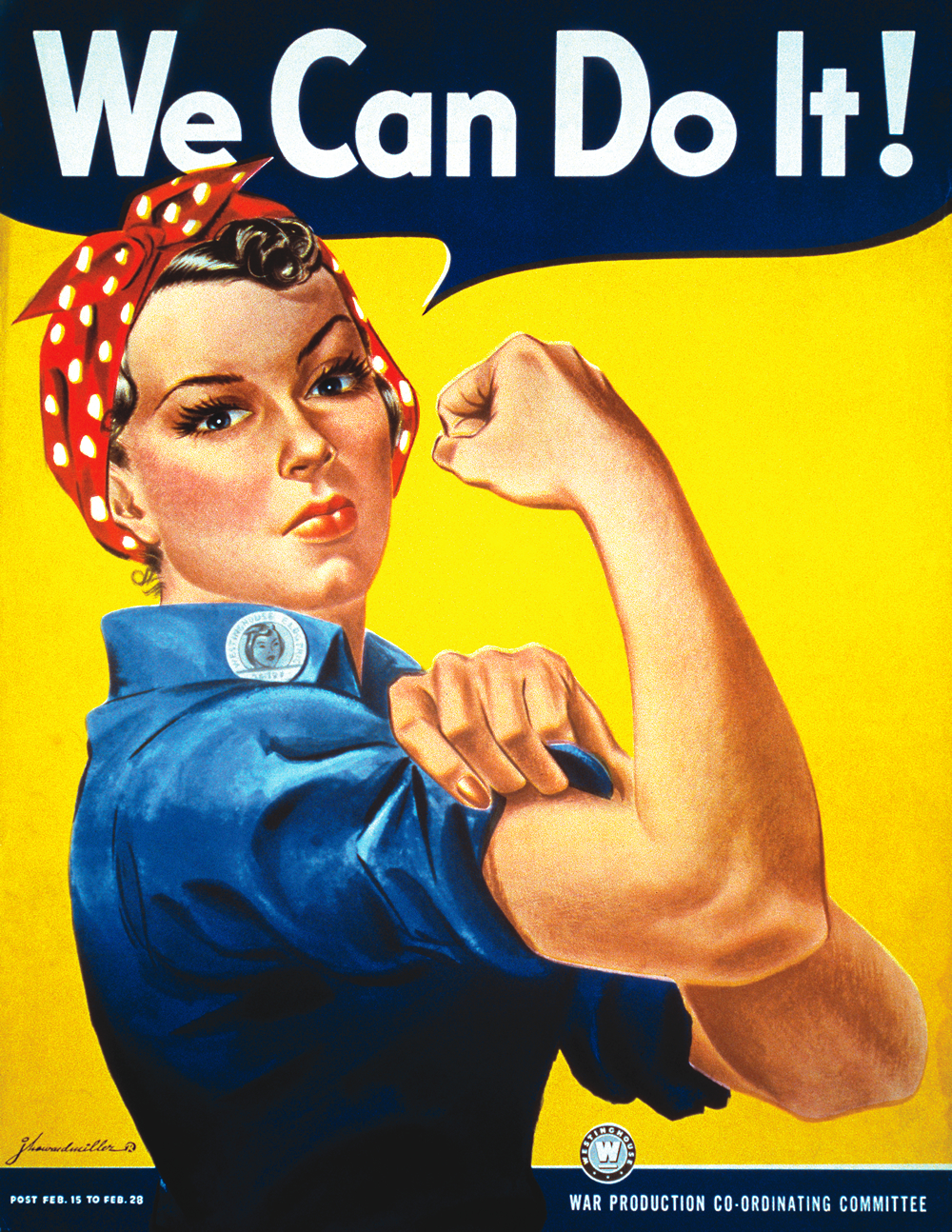
On March 22, 2016 a group of “Rosie the Riveter” veterans sponsored by Honor Flight in Detroit visited the World War II Memorial. During the Second World War these women and thousands like them worked at industrial plants around the country to manufacture the goods necessary to win the war. A recruitment poster designating them “Rosie the Riveter” became a part of story of World War II. They built everything from planes and ships to jeeps and machine guns.

Never before had women been so involved in the industrial production of the country. Their participation in the home front effort forever changed the role women would play in the workforce. The importance of their contribution in winning the war is engraved in stone and bronze at the National World War II Memorial.


"Rosie the Riveter" from Republic Pictures, 1944

Saturday, March 12, 2016

OV-10A Bronco Firefight Audio

Excerpted from Backtracking in Brown Water, by Rolland E. Kidder


A U.S. Navy Rockwell OV-10A Bronco of light attack squadron VAL-4 Black Ponies attacking 
target with a 12.7 cm (5 in) "Zuni" rocket in the Mekong Delta, South Vietnam, ca. 1969/70. 


00:15  /  The first part of this tape is a re-recording of an OV-10 Bronco air strike on the Vinh Te Canal.  I am listening to and recording the events of a previous night when a PBR boat captain had recorded the sounds of this air strike.   He and I are laughing and commenting on what occurred.   At one point, a siren goes off, the signal to stop firing.  Then a Vietnamese sailor yells at a local outpost for them to cease firing.  The outpost had been firing mortars into an area where these Navy strike aircraft (with the call sign “Black Pony”) were flying.   From the tape, you can hear metal falling on the deck of the PBR as the machine guns are fired.   Tracers from PBR machine guns were often used to support air strikes by marking the location of enemy positions.  The sound of the twin engine OV-10’s can be heard as they fly low over the boat on their strafing runs toward the target.

04:15 / On October 26, 1969, I tape-recorded the radio traffic during an enemy attack against our heavy River Assault Group boats.  The position of our PBR was about a mile from the encounter.  We could see the firefight in the distance.  The call sign for the RAG boat commander was “Brass Rail”, and individual boats under attack are designated by various letters of the phonetic alphabet.  U.S. Navy Seawolf helicopters and fixed wing Black Pony attack aircraft can also be heard calling in.  A RAG boat radio sometimes remains keyed in the “on” position and you can hear yelling and firing in the background. The tape accurately describes the chaos, anxiety and fear experienced in a firefight.  


AUTHOR'S NOTE:
Since publishing Backtracking in Brown Water, I continue to receive inquiries about this firefight audio link found on page 130.  The QR code provides readers with a direct link to audio files I submitted to the Internet Archive, a non-profit digital library dedicated to preserving artifacts of culture & heritage.


The recording itself came from a tape recorder that I had taken on one of the multi-day patrols on the Vinh Te Canal. (It was one of those small, cassette tape recorders that I had purchased in a Navy PX someplace.) While in Vietnam, I periodically sent tapes home to friends and family instead of writing a letter. On this occasion, I used it to actually record some of the "goings on" on the Vinh Te Canal. The first vignette includes some background discussion between myself and a boat captain of an airstrike he had recorded a prior night. The second occurs on another night when I turned the recorder on during a firefight between the enemy and the RAG boats.  

Fortunately, when I got back to the YRBM 20 after this patrol, I made some copies of the tape. One of them got to an Admiral who queried Mike Connolly about it (see page 125)

Sunday, March 6, 2016

EDITORIAL: Politics on the Margins


One of the sad developments this year in national politics is that, at least in early primary elections and caucuses, discussion has been polarized at the margins of political discourse.

On the Republican side, you have one candidate after another trying to out "anti-immigrant" the other. Who can build the biggest fence along the Mexican border? And how about this "I will get the Mexican government to pay for it!" 

On the Democratic side, you have a candidate promising tuition-free college for everyone, yet nothing is said about how this would be paid for. "Medicare for all" he says, but, again, nothing realistic is proposed as to how the nation would pay for that. "Taxing the rich" is not an answer since we all would have to pay more to meet these new financial obligations. 

In the middle of all of this sits the American public consisting mostly of common sense people who aren't asking for much other than that the country be sensibly governed by a leader who can balance the various interests of the Nation (and the world) and try to keep us out of war. 

Maybe this polarization will end with conclusion of the primaries, but I doubt it. The Republican leader of the U.S. Senate has vowed not to confirm any Supreme Court Justice proposed by the President before the election. Apparently, he wouldn't even consider a qualified Republican should the President submit such a name for appointment to the U.S. Supreme Court. It appears that fulfilling the constitutional obligation of appointing judges will have to wait until the craziness of this Presidential election is over. 

The rest of the world must be scratching its head. "What has happened to the Americans?" This is a country of immigrants, and is the nation that rebuilt its enemies after World War II. It is a country that prides itself on the rule of law and of finding solutions to common problems. It now seems to be a nation "on the brink" whose politics are running on fear, venal personal attacks and profane one-liners.

"Our concerns used to be ameliorated by the understanding that, in the end, common sense would prevail; and that there were adults in the room who would finally be elected to lead the country."

I suppose that we should keep our cool and not be alarmed, but something has invaded our political discourse. We don't talk with each other but at each other. We don't seem to be seeking ways to find common ground, but to accentuate differences based often upon the absence of truth. Our concerns used to be ameliorated by the understanding that, in the end, common sense would prevail; and that there were adults in the room who would finally be elected to lead the country. 

This year something different is going on with our politics, and it is not healthy.

Rolland E. Kidder


Wednesday, February 3, 2016

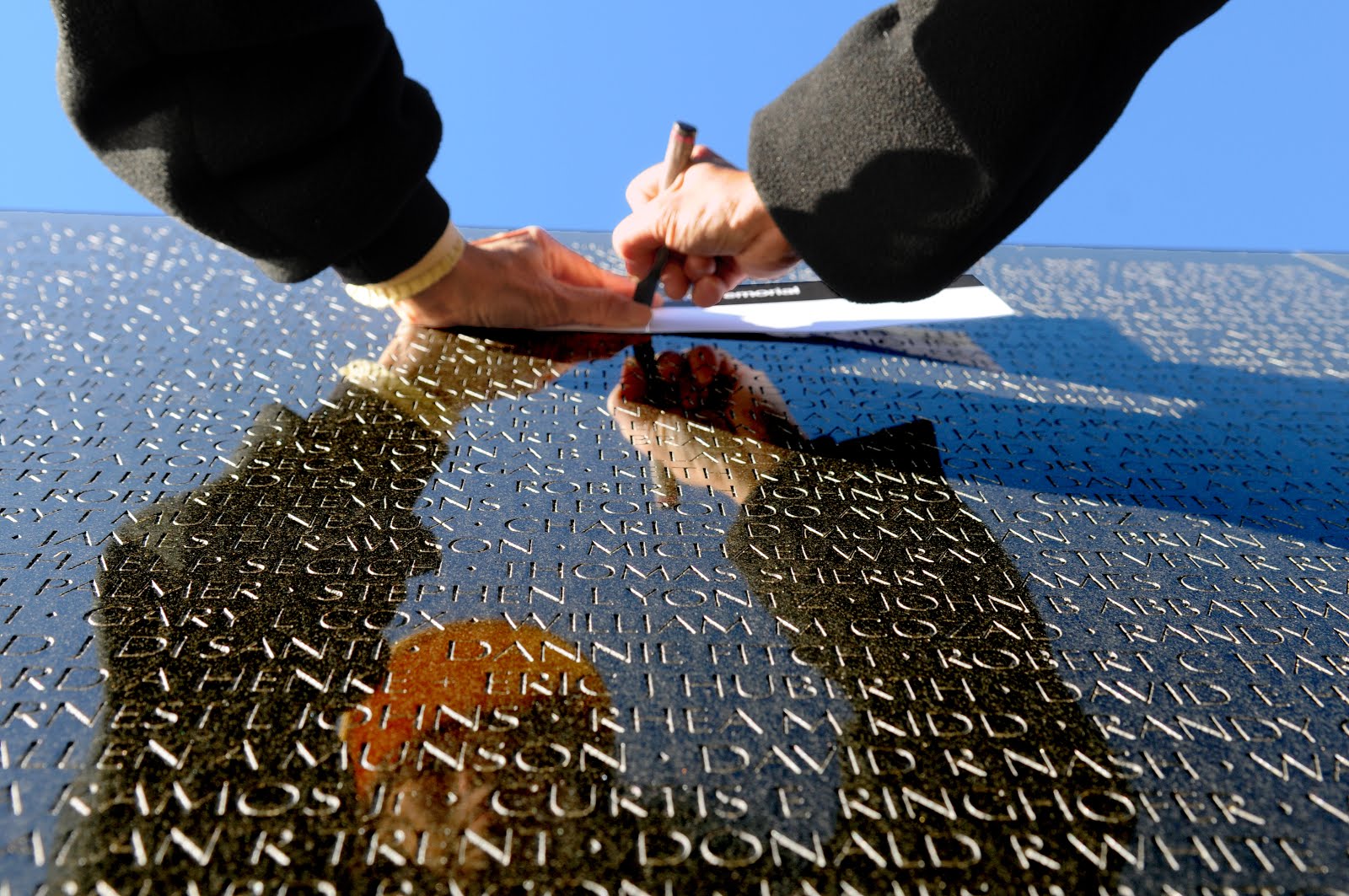
Vietnam Memorial Wall Rubbings

Leslie H. Sabo Jr.

One of eight men of the "B"/ 3 / 506, 101st Airborne Division (Airmobile) 
who were killed on May 10th, 1970 during Operation Binh Tay 1.

Rubbings courtesy of Dan Arant