Monday, May 29, 2017

Thoughts on Memorial Day, 2017

Originally published in The Post-Journal on Monday, May 29th, 2017.

I am a fortunate person. For nearly 15 years I have been privileged to serve as a Commissioner of the American Battle Monuments Commission (ABMC.) During that time, the agency was given the responsibility of finding a site, developing a design, raising the money and then building the National World War II Memorial. However, its primary mission has never changed–maintaining the overseas cemeteries for America’s war dead.

The North African American Cemetery near Tunis, Tunisia

When an American visits one of these cemeteries, the most-visited being Normandy, their outlook on the world gains a new perspective. The row-on-row of Crosses and Stars of David are a testament to what America has invested in making the world a freer and better place. They are reminders that being the leader of the free world has required a costly investment in American lives. We can’t walk that back. Those lives are gone.

When I hear people talk about isolation or withdrawal from the world, I want to take them to these places. We have invested too much in blood (and treasure) to pull back into some kind of cocoon and pretend that what happens in the rest of the world doesn’t matter. Our current status as a vibrant democracy has come at a great price. Whether we like it or not, what happens in the rest of the world affects us.

Recently, I received a copy of a quarterly newsletter which is sent world-wide to ABMC employees who work in these cemeteries. Most of them are not American though they are cutting grass, cleaning headstones and maintaining these sacred grounds so important to Americans. The United States has entered into agreements in these foreign countries which guarantee, in perpetuity, our rights to these lands where our war dead are buried. We also depend upon their citizens to maintain these places to our highest standard.

We have invested too much to pull back into some kind of cocoon and pretend that what happens in the rest of the world doesn’t matter. 

Though located in various countries, the mission of caring and supporting these cemeteries is common. The newsletter is printed in six languages: English, French, Dutch, Spanish, Italian and Arabic. Did I say “Arabic?” Yes, one of our cemeteries, where 2,841 of our war dead are buried, is located in Tunisia. In our efforts to defeat Germany in the Second World War, we first had to defeat them in North Africa.

We have very dedicated employees working at the North African American Cemetery near Tunis. It is located on a historically important plot of land, right next to the ruins of ancient Carthage. A few years ago, during the “Arab Spring,” Americans, for their safety, were ordered out of Tunisia. During their absence, work and maintenance at the cemetery continued unabated by Tunisians. These employees, citizens of Tunisia and Muslim by faith, continued their daily work in mowing the grass, polishing the stones and providing security for the cemetery where our war dead are buried. They are proud of the work they do, and the high standard of care at the cemetery continued without interruption.

So if people preach to you that our country should abandon contact with the Arab world and with the Islamic community or with other foreign lands–please remind them that too many Americans lie buried in these places for us to pull out now. American cemeteries around the world remind us on this Memorial Day that American values of freedom and democracy are still real and worth fighting for. The grave stones, memorials and markers tell the story.

Rolland Kidder
Stow


Saturday, May 20, 2017

A Tough Vote


Whatever you think about the “Repeal and Replacement of Obamacare” which recently passed in the House of Representatives, most observers would agree that it was a tough vote. It just passed the House with one extra vote (217 “yeas”), 216 was the needed threshold.

I recall some “tough votes” when I was in the New York Legislature. In 1975, when New York City was going bankrupt, there were a lot of them. Usually, they occurred in the middle of the night after hours of floor debate… after members had been worn to a frazzle. Often the legislation had been negotiated only hours before and opponents would allege that “the ink is still wet on this bill!” The goal was always to have at least one more vote in favor than the bare minimum to pass. You didn’t want members voting “yes” on a controversial piece of legislation who would then have to go out and defend themselves in the next election with an accusation that “without your vote, it wouldn’t have passed!”

“If you’ve got the votes, call the roll!”

There was also another axiom on tough voting that, I believe, was coined by former Speaker of the House, Sam Rayburn: “If you’ve got the votes, call the roll!” Another way to state that would be: “Don’t call the roll until you have the votes!” You don’t want to put members on the spot where they may end up making a tough vote only to have it fail to pass. (That is why a similar bill on Obamacare had been pulled from the floor in March.) So by all counts, the recent vote to “repeal and replace” met the criteria of being a “tough vote.” It also qualified for the “ink not being dry” on the bill, since the Congressional Budget Office did not have the time to estimate the financial and human impact of the legislation prior to its passage.

There is one aspect of the vote which might make the recent action in the House even tougher. If someone goes on the line to cast a difficult vote, it is usually best, politically, if the bill becomes law. Perhaps the worst situation in voting in a legislative body occurs when you go on the line in support of a controversial “one-house” bill. That is, it might pass one house of the legislature but not the other.

I remember a lot of walks I made during those days in 1975 from the Assembly chamber over to the State Senate floor to discuss legislation with my counterpart in the State Senate, Jess Present. Jess and I both subscribed to the position that it was best that bills which were difficult to pass should “end up on the Governor’s desk” and signed into law. We weren’t much interested in passing “one-house” bills.

The matter of whether the “Repeal of Obamacare” actually makes it to the President’s desk is something that still seems unclear in Washington. The Republican Party controls both houses of the federal legislature and also the Presidency. Yet, the U.S. Senate has made it clear they will not be putting a “rubber stamp” on what was passed in the House. They want to hear what the Congressional Budget Office and health care providers have to say about the legislation.

If the Senate makes substantive changes to the legislation, it is questionable whether the “Freedom Caucus” in the House would accept those changes. If that happens, there could be a stalemate and no legislation would go to the President. (For those interested in maintaining coverage for the uninsured, this might be a good result.) We have been debating health care politics for the past 8 years. It would be nice if we could finally settle on a national health policy and move on to other issues… like rebuilding our infrastructure and investing in public works such as sewers around Chautauqua Lake!

Rolland Kidder
Stow, NY

Wednesday, April 19, 2017

Should New York Have a Constitutional Convention?

Originally published in The Post-Journal on Sunday, April 16th, 2017.

A view from the original New York State Constitution Ratifying Convention in July, 1788 by Gerald Foster.

Every 20 years, New York residents get a chance to vote on whether or not to have a “Convention” to evaluate and propose changes to the state’s Constitution. Any recommended changes from such a Convention would need to be submitted to the voters for approval. 

Usually, every two decades, this proposal gets voted down. Opponents say: “It will be too expensive.” Others just vote “No” because that is the default position for people who don’t like government. However, the biggest opponents are usually the entrenched interests in Albany like the large state public employee unions and can include the Governor and leaders of the legislature. Why change things if you believe the system is working on your behalf? 

The difference this year is the tremendous cloud that hangs over Albany because of the convictions and indictments of so many of the big “players” on the statewide scene. The past Speaker of the Assembly and Majority Leader of the State Senate are appealing their convictions of selling influence. A grand jury has indicted key individuals in the Governor’s office of rigging the bidding for state contracts. It is not a pretty picture. There is talk of ethics reform but tough new laws on oversight and accountability are difficult to accomplish when they are related to the power structure of state government. 

Because the problems that have evolved are “structural” in nature, the only way to effectively deal with them is through amending the state’s Constitution. 

I have some understanding of the issues since I viewed the process during the four terms I served in the New York State Assembly. Because the problems that have evolved are “structural” in nature, the only way to effectively deal with them is through amending the state’s Constitution. 

For example, should New York limit the terms that a person can serve as Speaker of the Assembly or Majority Leader of the State Senate? This approach has been implemented in California. Should the state limit the number of terms that a Governor can serve… as we do at the federal level in limiting the President to two terms? To implement such structural changes in our state would require a change in the New York State Constitution. 

Other structural changes could include establishing a non-partisan commission perhaps consisting of jurists to implement the reapportionment of legislative and congressional districts that takes place every ten years. Right now, the legislature and governor make these decisions based more on political considerations that anything else. Other states have implemented non-partisan redistricting panels moving away from the “gerrymandering” approach still followed in New York. 

Realistically, the only way to make any changes of this magnitude would require a Constitutional Convention. Such proposals are not going to come from the Governor or state legislature. Is the state ready for this? These are not ordinary times. The political quagmire that our state politics has become requires change. In my view, this is a year to vote “Yes” on a Constitutional Convention. 

The voters will have the last say. They will first need to vote for a Constitutional Convention…then they will subsequently have to approve any recommended changes to the New York State Constitution that would be proposed by the Convention. The important vote on having a Constitutional Convention only happens every 20 years. Citizens of New York need to be thinking about how they will vote in November. 

For more information on the New York Constitutional Process and critical timelines, visit 
The New York State Constitutional Convention Clearinghouse.

Rolland Kidder 
Stow, NY


Thursday, April 6, 2017

Spring Starts with the Masters

Frank Deford, NPR, April 5, 2017


Amen Corner at Augusta, where treachery and beauty blend together as well as any James Bond villainess

In days of yore, Opening Day of the baseball season was special, signifying that spring had come at last.

Today, however, Opening Day sort of dribbles into existence, and the spiritual start of spring now belongs to the Masters golf tournament, where the azaleas and magnolias and dogwood bloom. And if they dare look like they're gonna bloom too soon, in March the groundskeepers are rumored to pack them with ice to make sure spring comes as God intended it, which this year is on Thursday.

By now, in fact, the Masters course is a federal treasure, to sports what Old Faithful is to the National Park Service. And once again it is peaceful at Augusta National Golf Club, after some rather ugly stand-offs in recent years, when the club balked at changing its all-white, all-male membership tradition. African-Americans and female Americans are on the club manifest now along with other golf-Americans, and all is serene once again.

Yes, some people do find the Masters too snooty and the closing ceremony is so painfully precious that even the man who for years himself produced the coronation admitted that it was "the worst thing in the world." But I'm being picayune. The Masters is otherwise a thing of efficient beauty.

Start with the name.  Masters sounds almost too elegant to be American. 

And when it comes to names? There are really only two discrete pieces of official U.S. sports real estate which are familiarly known by a title. One is a huge ugly slab, but besides that Green Monster at Fenway Park, there is only Amen Corner on the back nine at Augusta, where treachery and beauty blend together as well as any James Bond villainess.

Even the fans, who must be called "patrons," are more polite and litter-conscious than at other sporting venues. The Masters is not greedy. You wanna buy a Masters souvenir logo shirt? Sure, let's go over to the nearest Ralph Lauren boutique. Oops, you can only purchase Masters memorabilia at the Masters, this one week of the year. And most meaningful of all to patrons watching at home, the tournament has fewer commercials than other sports events.

Well, yes, the Masters is too stylish to be an American icon. It's as out of character for Uncle Sam as a McDonald's is for France. But hush now and stay behind the ropes. Spring begins on Thursday.


Sunday, April 2, 2017

A New Governing Coalition


If you are my age, you probably remember the great old western movie “High Noon.” The Marshall (Gary Cooper) of a frontier town meets a gun-slinger and his outlaw gang at noon in a shoot-out. It is a tense, decisive moment.


On a recent Friday, it was “high noon” in the halls of Congress as the time approached for a decisive vote on the repeal and replacement of Obamacare. But then, it didn’t happen. The votes weren’t there. “High noon” was a fizzle.

I am sure many in our community were watching since in the midst of all the legal language in the bill was a provision that would have prohibited New York state’s current mandate of requiring that a significant portion of Medicaid costs be paid by counties. Since 50% of our local county property tax bill goes to Medicaid, this could have ended up being a tremendous benefit to local tax payers.

However, that provision, along with everything else being proposed never saw the light of day. Action on the repeal of Obamacare was called off, and I doubt will be tried again in this current Congress.

What the blow-up in repealing Obamacare highlighted was the continuing story we have seen since John Boehner was Speaker of the House of Representatives. There really is no true governing majority in the Republican Party in the House when it comes to tough issues.

It appears likely that we are entering a time of national political gridlock where very little is going to get done.


The same kind of impasse is likely to be seen again in upcoming tough votes like extending the national debt limit or passing another budget. It appears likely that we are entering a time of national political gridlock where very little is going to get done.

Let’s hope it doesn’t result again in a shutting down of the government.

What it means for our new President is that he is going to have to try and cobble together a coalition which can govern. The “Art of the Deal” is now going to be more difficult. Somehow a coalition of Republicans and Democrats will need to be formed in the House of Representatives so that the governing of this great nation can continue to happen.

One idea might be to look at what the Republicans in New York state have done in the State Senate.

They have agreed to work with a splinter group of Democrats (who call themselves the “Independent Democratic Coalition”) to cooperate on major legislation and in putting together the annual state budget. So far this effort of bi-partisanship in Albany has been productive.

Are the Republicans in the House of Representatives in Washington ready to embrace such an idea? Is there a group of independent minded Democrats who will break with their established ranks to do this?

The lesson being learned again in Washington is that it is a lot easier to get elected than it is to govern. Yet, good governance is actually what the people need and want. What we are going to find out in the coming months is whether the Congress is capable of doing it.


Rolland Kidder
Stow, NY


Monday, March 27, 2017

Two Options for Public Service


Most people, I believe, support the idea that public service is a good thing. It may have fallen out of favor recently as we have started “draining the swamp” in Washington. Nevertheless, I am confident that most Americans still rally around the idea that public (government) service and good public servants help us all.

As an example, we have two public organizations in Chautauqua County which require leadership. One employs a CEO who is paid approximately $160,000 a year, has an employment contract, a good benefit package, supervises 158 employees, has a regular work week and administers a $25.5 million budget. The other organization has a CEO with no employment contract, who makes $95,000 per year, administers a $273 million budget, supervises 1200 employees and works a regular work week plus is required to attend virtually non-stop evening and week-end meetings/events with constituents.

If one of your children were seeking employment and wanted a CEO position in the public sector in our area… which job would you recommend they take? I would imagine that for most people it would be a “no-brainer.” You would recommend the job with higher pay, fewer employees, a smaller budget and more free time.

So what does this boil down to in Chautauqua County? In this particular case, it would mean that you would recommend the position of Superintendent of the Southwestern Central School system vs. that of becoming the County Executive as being the best employment option for one of your kids. As a matter of fact, it might even evoke the thought of “who in their right mind” would even want to be the Chief Executive of Chautauqua County?

Who in their right mind would even want to be Chief Executive of Chautauqua County?


This all, of course, is becoming relevant because our current County Executive, Vince Horrigan, has announced that he is not running for re-election. Most of us, I believe, feel fortunate that Mr. Horrigan has been our county leader for the past four years. He is a retired Air Force Officer who has worked hard on our behalf to stabilize county finances, encourage investment in sewer and water infrastructure, and promote job growth in the county. But the larger question is: how long are we going to be able to find good people to run for this job?  Something is out-of-kilter in how we value this leadership position.

Years ago, I was involved in the decision to create a County Charter form of government with an elected County Executive. We debated having the Executive be an appointed official but thought, at the time, that accountability to the voters should be the over-riding concern… and the voters approved direct election of the Executive in adopting the County Charter. However, I am having second thoughts now about that decision.

Something is out-of-kilter in how we value this leadership position.


Maybe the County should implement a structure more aligned to that in the private sector. You could have a Board of Directors (the legislature) who are responsible to the Shareholders (the voters), and the Board would appoint a CEO (the County Executive) to run the day-to-day affairs of the County. At least, it seems to me, this system might be more appealing to those who want to commit to being a CEO in a position of public service. It shouldn’t be that the position of School Superintendent (of which there are 17 in Chautauqua County) should be so much more appealing than that of the County Executive who is responsible for the largest portion of our non-school, governmental functions.


Rolland Kidder
Stow, NY


Monday, January 30, 2017

A Tale of Two Days in the Federal City


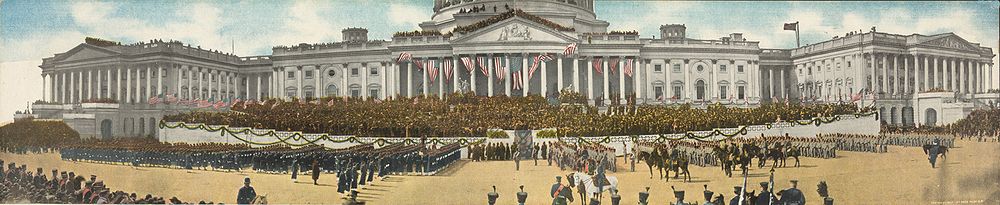
This week we sat down to dinner with great friends over many years. They had gone to D.C. to attend the Inauguration of Donald Trump. We had gone primarily so that my wife, daughter and other family members could attend the Women’s March on Washington.

One of the pluses of living in a small town is that you don’t have to go far to have a stimulating political discussion! Our friends thought the new President’s speech was fine and that he essentially restated what he had promised to do in the campaign. They had prime standing room near the Capitol and looked out on a vast sea of enthusiastic supporters who had come to participate in the celebration.

What I saw was an unsmiling new President with his fist raised. He seemed to be announcing that Washington would now be introduced to a new “no holds barred” type of political confrontation. The Lincolnesque words that I was hoping for to pull the country together like “malice toward none, with charity to all”… never came.

Common in our interest was witnessing the peaceful transfer of power

Nevertheless, we and our friends were experiencing the same event. Common in our interest was the witnessing of the peaceful transfer of power in this great democracy which must be a marvel to the rest of the world. Once the speeches were over, the Trumps accompanied the Obamas to the east side of the Capitol where they shook hands as the former President and his wife left by helicopter.

During the Inaugural festivities the camera near the top of the Capitol dome scanned the crowd. The Mall was packed with people near the Capitol, but you could see open space down toward the Washington Monument. That wouldn’t have usually resulted in acrimony, but became controversial when the new President, the next day, criticized the media for underestimating the crowd.

At our vantage point, our daughter’s home about 10 blocks east of the Capitol, Inauguration Day on Friday was relatively quiet. However, on Saturday, the day of the March, nearly every street heading toward the Capitol was jammed with people walking. The D.C. government announced that 200 bus parking permits were issued for the Inauguration, but that 1200 had been issued for the March. Many people were walking 2-3 miles from the bus parking at RFK stadium to get to the National Mall.

People were happy to be there and involved in their democracy… 
though not necessarily excited about their new President

Those from our family who joined in were amazed at the dignified and courteous demeanor of the crowd. People were happy to be there and involved in their democracy… though, not necessarily, excited about their new President. There were so many people on the Mall that, at first, there was no place to march. Finally, the crowd began to move toward Pennsylvania Avenue and many ended up walking toward the White House along the same route the parade had taken the day before. If you combined the crowds from Friday and Saturday it could have been the biggest Inaugural event ever!

Two trips over two days to the Federal City experienced by two couples who saw things a little differently and retold it over a lively dinner conversation… that is one of the beauties of living in Chautauqua County. It is good to keep talking with each other!


Rolland Kidder
Stow, NY


Sunday, January 15, 2017

Uncharted Territory


Published January 15, 2017 in The Jamestown Post-Journal

One of the exciting aspects of being alive in 2016/2017 is that we have witnessed a lot of “firsts” in American politics. It is the first time that we have elected a person with no governmental experience to the highest office in the land. It is also a “first” that he did this with little support from the establishment of his own party and he did it single-handedly by being his own communications director. It will be interesting to see how it all plays out.

In saying that President Trump had no “governmental experience,” we must acknowledge that others came to that office who had never been elected before. Herbert Hoover comes to mind. However, Hoover had extensive experience dealing with public issues and had been Secretary of Commerce in the 1920’s. Presidents Grant and Eisenhower also had no elective experience, but they had been deeply immersed in the politics of the Nation through their military service. Because of that, they had a strong sense and appreciation of the complexities and challenges associated with becoming President and Commander-in-Chief.

If nothing else, Donald Trump is now living proof that, in America, experience in politics and government is not a prerequisite to becoming President. That also means that though we are rooting for him to be successful, we are also “holding our breath” a bit hoping that he doesn’t fail.

It also is becoming apparent that Mr. Trump’s ascension to the Presidency is coming at a time when the world, in general, is in a topsy-turvy mood. If this were another country (take Argentina as an example), one wouldn’t be much worried. The world doesn’t usually look to Argentina for global leadership. However, this is the United States of America which fought two World Wars in the 20th century and is now looked to as the leader of the world. It would have been reassuring had Mr. Trump been tutored at least a bit in the intricacies of international diplomacy.

As Van Miller used to say: “Fasten your seat belt folks!”

But, all of this is now conjecture. As Van Miller used to say in announcing Buffalo Bill’s games: “Fasten your seat belt folks!” We have a new President, and we must wish and hope for him to be successful.

I see some bright spots in his leadership team. His nominee for Secretary of Defense, James “Mad-dog” Mattis had a stellar career in the Marine Corps and was exposed to the quagmire of the War in Iraq. Mike Pence, his Vice President, served in the Congress and as Governor of Indiana—he knows how difficult it can be to run a government.

Then, there is his son-in-law, Jared Kushner: a young, 35 year-old man, but a person who seems to have depth and perspective. He studied sociology at Harvard, and received his JD and MBA at New York University. You cannot have gone through that and not picked up on the complexities and challenges of running a country like America which has obligations of leadership throughout the world. Mr. Kushner will now be Senior White House Advisor to the President.

So good luck, Mr. President. You won the election and now all of us will be affected and governed by your decisions. We are in the same boat now!

Rolland Kidder
Stow, NY

Monday, January 2, 2017

Electoral College Is Our System


Published January 1st, 2017 in The Jamestown Post-Journal


an amendment?  Probably not. 

Wednesday, December 21, 2016

The 75th Anniversary of Pearl Harbor


On December 7th, I was privileged to attend the 75th Anniversary commemoration of the Pearl Harbor attack at the World War II Memorial in Washington. Several Pearl Harbor survivors and other veterans of World War II were in attendance and were honored. They also assisted in the laying of wreaths along what is called “freedom wall.”


Former Members of WWII Memorial Site and Design Committee
(Frank Moore, Pat Foote & Rolly Kidder, 
taken December 7, 2016)

It was a cold but beautiful day at the Memorial. The Navy Ceremonial Band played and there were probably a thousand people gathered around the Rainbow Pool which is the architectural centerpiece of the Memorial. You become overcome with the “Americana” of it all. The Lincoln Memorial stands majestically in the background and the Washington Monument rises off to the East. Surrounding the plaza and pool are 56 granite pillars, each representing the states and territories that contributed to the war effort and made victory possible. They are connected by huge bronze ropes symbolizing the unity of the nation at that time. Never in the history of our country has the nation been more united.

Some of the World War II veterans attending had been flown in by Honor Flight from Austin, Texas. Honor Flight is a totally volunteer effort by communities around the country and was created to insure that World War II veterans would have a chance to see their Memorial. It has expanded so that now Korean War and Vietnam veterans can also visit the memorials that honor their service. There have been veterans from Chautauqua County who have participated in flights from Western New York and the Buffalo/Rochester area.

The highlight of the ceremony was a powerful and very personal speech made by Senator John McCain. Both his father and grandfather served in the Navy during World War II and both attained the rank of four star Admiral during their naval careers. McCain still remembers Pearl Harbor Day in 1941 when as a 5 year-old, on a Sunday afternoon, a Navy car pulled into the driveway of his family’s home in Connecticut to inform his father that the Japanese had bombed Pearl Harbor and that he must immediately return to the Naval base. In John McCain’s words: “I rarely saw him for the next four years.” Like every family who lived during that time, his family was personally affected by the declaration of war. 

There is a saying about veterans that “all gave some, but some gave all."  
This could also be said about some families…

John McCain’s grandfather became one of the leading naval officers of the War and served as one of the commanders in Admiral “Bull” Halsey’s Fast Carrier Attack Force in the Pacific. The pressure and stress of war took their toll. Senator McCain related a story I had not heard before. On the day his grandfather returned home after the end of the Second World War, “exhausted from the burdens of war,” he died. He had given the country his all. He had no more to give. 

I have always held Senator McCain in high regard. Part of that comes from the fact that we are both Vietnam Navy veterans. However, very few veterans of that war went through the five years of imprisonment that John McCain did after being shot down over North Vietnam. After retiring from the Navy, John McCain has gone on to serve his state and country for another 30 years in the Congress and the Senate, and was also a candidate for President of the United States.

Families like the McCain’s make you proud to be an American. There is a saying about veterans that “all gave some, but some gave all.” This could also be said about some families… including that of Senator John McCain.


Rolland Kidder 


Thursday, November 24, 2016

A Letter to the Kids


November 20, 2016

Election Post Mortem—A Letter To The Kids

Over forty years ago, I returned to Chautauqua County from the Vietnam War and became involved in local politics. It started with a defeat in 1970 in a run for the New York State Assembly. After that, I was elected twice to the county legislature and then four times to the Assembly before leaving elected politics to become involved in the private sector. So I have experienced the “ups and downs” of our system of electing those who represent us in government. I also came to understand and respect the electorate and also to respect those who are willing to become involved in politics and run for public office.

Our democratic process will only work if citizens become involved, and if some of those citizens are willing to assume the responsibility of serving in public office. This last election campaign was not one of inspiration for younger generations of Americans, and so, after the election, I sent this letter to our four children.

“To the Kids:

You have already probably heard more than you need to about the election. In my view, the biggest casualty is probably the system itself. Who would want to run for President and endure the mud slog that we just went through?  Would you want to? Would you want one of your kids to?  The answer is probably “no.”

It made me think back to 1960. I was a Republican and a student at Houghton College. The concern then was that JFK was a Catholic and that if he were elected, the Pope would take over the U.S. government. Then, in fact, Kennedy did get elected, and the Pope didn’t take over. What we remember from that time now is the inaugural: “Ask not what your country can do for you. Ask what you can do for your country.” Out of that came the Peace Corps and lot of new recruits (like me) who got interested in government.

Compare that to what we just went through. “Lock her up!” “Drain the swamp!”  Who is going to be encouraged to give some time to government service after that? That is what concerns me most.

I hope that this past election doesn’t discourage members of our extended family from getting involved at some level in “giving back” through government service. We need people to run local governments, school districts and, maybe, here at the lake… sewer districts! I am sorry that our grandkids had to go through this ugly election. It is really better than that, and we need people involved as citizens. We are all shareholders in this corporation we call “America.”

So let’s not retreat into a cave and let somebody else deal with the problems. Maybe there is somebody out there who would make a good legislator, school board member, Assemblyman, Congressman… and who knows… President. This is America. What we need now is to have people “double down” and get involved!

Dad

Rolland Kidder is a Stow resident.


Tuesday, August 30, 2016

Father of the National World War II Memorial


On April 22nd, this year, one of my best friends died: Ambassador F. Haydn Williams of San Francisco.

In a prior posting, I wrote about the incredible life of Senator Robert Dole and his commitment to the Memorial and being co-chair of the campaign to raise the money to build it. Haydn Williams, also a World War II veteran, though not as well-known as Senator Dole, was the driving force behind finding the site, developing the design and then shepherding the whole idea of a national memorial through the myriad of approving agencies necessary to see it built. As one who served on his World War II Committee at the American Battle Monuments Commission (ABMC,) I witnessed the profound impact that Haydn had in seeing the World War II Memorial become a reality.

Haydn and Rolly reviewing architectural models of the WWII Memorial in Washington, DC

Starting in 1995 and, over the course of six years, this committee (also called the Site and Design Committee of the ABMC) met one week-end every 4 to 6 weeks in Washington, D.C. Haydn would fly in from San Francisco two or three days before the meeting to prepare for it, and then would stay on in the District for another few days after these meetings to follow through with decisions that had been made. He was a “task-master” in the best sense of the word, and would never accept anything but the best when it came to the World War II Memorial. On the occasion of a celebration of his life in May at the Memorial, many of those with whom he was associated came to pay their respects and voice their gratitude for what this remarkable man had accomplished. (Video of the service and reception in his honor, is available by going to the website of Friends of the National WWII Memorial at: www.wwiimemorialfriends.org.)

“Here, on the east-west axis of the Mall is where the Memorial should be. World War II was the defining event of the 20th century for our country. It should stand here between Lincoln and Washington, marking similar events in the 18th and 19th centuries.”  

Early in the site-selection process, our committee made a visit to 7 or 8 possible sites for the Memorial. It was raining and at the end of a day of visiting these sites in March, 1995 when Haydn stopped us as we walked around the old Rainbow Pool at the eastern end of the Reflecting Pool on 17th Street. “Here, on the east-west axis of the Mall” he said, “is where the Memorial should be. World War II was the defining event of the 20th century for our country. It should stand here between Lincoln and Washington, marking similar events in the 18th and 19th centuries.” At the time he said that, the old Rainbow Pool was not on the list of possible sites that had been given to us by the Commission of Fine Arts (CFA.)

After that meeting, Haydn went to see J. Carter Brown, Chairman of the CFA. Shortly thereafter, the Rainbow Pool was added as a potential site and was subsequently chosen by the ABMC to be the site of the National World War II Memorial. There was vehement opposition to this decision and at nearly every regulatory hearing (of which there were some 22 over the next 5 years) on approving design elements… opponents would come to try to derail the site selection. Haydn stood firm in spite of this opposition and would say when the Memorial was finally under construction: “When I look back on what happened, I think that perhaps my biggest contribution was in getting and keeping the site.”

The World War II Memorial stands there now, a testament to this man’s vision and tenacity of spirit. When he came to the Memorial for the last time in 2014 to celebrate its 10th year anniversary, he described the Memorial as “quietly taking its place as one of the historic icons on the National Mall…becoming, in a way, Washington’s village square, the town green on the Mall…a place to linger, to stroll, to listen and to share memory and meaning…. Nestled between Lincoln and Washington, the WWII Memorial stands as the singular most important event of the 20th century.”

There are few times in life when so much can depend on the vision and leadership of one man.  Ambassador F. Haydn Williams was one of those few without whom the National World War II Memorial would not be where it is, or be the magnificent memorial it has become.  More information on the life and service of Ambassador Williams can be found in his obituary printed in the Washington Post:  Haydn Williams Obituary.


Rolland E. Kidder


Friday, July 29, 2016

A Birthday Tribute to Senator Robert Dole


On July 15th, a week before he reached the age of 93, former Senator, Presidential candidate, and World War II veteran, Robert Dole, went to the World War II Memorial to welcome veterans of the 96th Infantry Division. Despite physical difficulties and advancing age, Bob Dole continues to lead and to welcome World War II veterans to their Memorial.

96th Infantry Division veteran Bub Simmons and his wife, Fay, greet Senator Dole at the World War II Memorial.

Park Service volunteer, Donna Prince, wishing Senator Dole a "Happy Birthday."

These photos show him being greeted by a veteran of the 96th as well as by Donna Prince, a National Park Service volunteer whose parents and family were interred as Japanese-Americans during the Second World War. Interestingly, Bob Dole was wounded in Italy during the war fighting nearly side-by-side with Japanese-American soldiers. His friend, Senator Dan Inouye (deceased), as was Bob Dole, was wounded fighting the Germans in the mountainous area north of Florence.

I first met Bob Dole in 1997 at the White House when President Clinton invited him to attend an event announcing the winning design for the World War II Memorial. Despite the rigors of the 1996 Presidential campaign, Senator Dole was gracious with a sense of humor when introduced that day by President Clinton. He started his remarks by saying: “I thought that when the President invited me here today, that he was going to hand me the keys to this place!” Everyone laughed and then Dole went on to remark about the significance of the Second World War, the importance of remembering it and never forgetting the sacrifice and dedication of the American people which brought forth the victory. 

“I thought that when the President invited me here today, that he was going to hand me the keys to this place!”

It was either that day or shortly thereafter, that the President asked Senator Dole to Chair the effort to raise the funds to build the Memorial. Senator Dole said “Yes” and also asked that there be a Co-Chair to help him. An affirmative response to this came when Fred Smith, the Chairman of the FEDEX Corporation, agreed to help. The two of them, Dole and Smith, went on to conclude one of the most successful fundraising efforts ever conducted for a Memorial in Washington. Before it was done, nearly $200 million had been raised from the American people to build the iconic Memorial what now stands on 17th Street, on the East-West Axis of the Mall, between those named for Lincoln and Washington.

For Bob Dole, that was only the beginning. Ever since the National World War II Memorial was dedicated in 2004, he has, whenever possible, been at the Memorial to welcome his fellow World War II veterans. He has been an inspiration to them and to all of us. On the occasion of his 93rd birthday, it is fitting that all Americans pay tribute and give thanks to Senator Robert Dole for what he has done for the country and, specifically, for his dedication to the cause of building a World War II Memorial in our nation’s capital.


Rolland E. Kidder


Saturday, July 2, 2016

Thoughts for the 4th of July


The Frailty of Human Institutions

It wasn’t that long ago (the 20th century) when Europe was consumed twice by war which resulted in the deaths of millions. The countries of Europe lined up along national/ideological lines, formed alliances and then went to war to settle their differences. Whatever the cause, including naked aggression by some states against others, the results were devastating. It is good to remember on the 4th of July that thousands of American soldiers, sailors and airmen also perished in these conflicts and many are buried in American cemeteries in Europe.

After the Second World War, tired and impoverished by war but with the help of the American Marshall Plan, Europe slowly began to rebuild itself by entering into cooperative working agreements and by creating such institutions as NATO and the European Union (EU.) Now, 70 years later, we are facing the reality of an “unwinding” of those institutions and relationships. The recent vote in Britain to leave the EU should be of concern to everyone, including Americans. Like it or not, our country has been inextricably entwined in events in Europe for the past 200 years, including its wars.

One generation does not necessarily build on the experiences of prior generations. Over time people forget. It takes years of dogged determination to build agreements and trust between nations. It can all come tumbling down quickly. This seems to be what happened in the recent “Brexit” vote to leave the European Union. People want quick solutions to their perceived problems, but most problems are complex and solutions take time.

Building a united Europe has never been easy. Every nation in the EU has a different language or culture. In the 17th century, the continent was also split along religious lines (Protestant vs. Catholic). During what was called the “Thirty Years War”, it is estimated that nearly a quarter of the people living in Central Europe (now Germany) were killed. Sadly, the history of fighting and war in Europe is much longer and more well-established than its more recent history of working together.

The “Brexit” is more than a ho-hum moment in history. It could lead to further divisions in Europe and more political instability. Human institutions are vulnerable. Americans should be concerned. Cutting ourselves off from Europe is something we couldn’t do even if we wanted to. It is always easier when going to the polls to just get mad, vote “No” and pull oneself into a self-protective cocoon. Unfortunately, that usually doesn’t solve problems. For America’s sake, let’s hope that Europe can figure out a way to keep itself together.


Rolland Kidder
Ashville, NY